Bentonite is a remarkable clay material that has gained significant attention across various industries due to its exceptional water – absorbing properties. As a bentonite supplier, I’ve witnessed firsthand the widespread applications and the importance of understanding how bentonite absorbs water. Bentonite
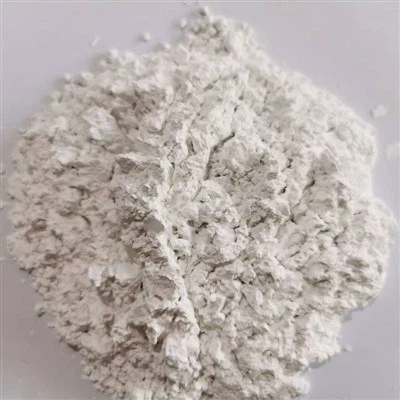
The Composition of Bentonite
Bentonite is primarily composed of montmorillonite, a type of clay mineral. Montmorillonite has a unique crystal structure. It consists of layers of aluminum – silicate sheets, with a negative charge on its surface. This negative charge is a key factor in its water – absorbing ability. The layers are held together by weak forces, and there are spaces between these layers, known as interlayer spaces.
The Mechanism of Water Absorption
Ion Exchange
One of the initial steps in water absorption by bentonite is ion exchange. The negative charge on the surface of montmorillonite attracts positively charged ions such as sodium, calcium, and magnesium. When bentonite comes into contact with water, these cations are exchanged with the water molecules. For example, if the bentonite is sodium – bentonite, sodium ions are released into the water, and water molecules take their place in the interlayer spaces. This ion – exchange process is crucial as it allows the water to penetrate the clay structure.
Hydration
After the ion – exchange process, hydration occurs. Water molecules are attracted to the negatively charged surface of the montmorillonite layers. The water molecules form a thin film around the clay particles. The polar nature of water molecules allows them to interact with the charged surface of the clay. As more water molecules are attracted, they start to enter the interlayer spaces. The water molecules insert themselves between the layers of montmorillonite, causing the layers to expand. This expansion is a visible sign of water absorption.
Swelling
Swelling is a direct consequence of water absorption. As water enters the interlayer spaces, the volume of the bentonite increases significantly. In some cases, bentonite can swell up to several times its original volume. This swelling property is highly valuable in many applications. For instance, in the oil and gas industry, bentonite is used as a drilling fluid additive. When it swells in the borehole, it helps to seal the wellbore, prevent fluid loss, and provide lubrication during the drilling process.
Factors Affecting Water Absorption
Type of Bentonite
There are two main types of bentonite: sodium – bentonite and calcium – bentonite. Sodium – bentonite generally has a higher water – absorbing capacity compared to calcium – bentonite. This is because sodium ions are more effective in promoting the expansion of the interlayer spaces. The larger hydrated radius of sodium ions allows for more water to be held between the clay layers. In contrast, calcium – bentonite has a more compact structure, and its water – absorbing ability is relatively lower.
Particle Size
The particle size of bentonite also plays a role in water absorption. Finer particles have a larger surface area compared to coarser particles. A larger surface area provides more contact points for water molecules to interact with the clay. As a result, bentonite with finer particles tends to absorb water more quickly and to a greater extent.
Temperature
Temperature can affect the water – absorbing process of bentonite. Higher temperatures generally increase the kinetic energy of water molecules, which can enhance the rate of water absorption. However, extremely high temperatures can also cause the water to evaporate from the bentonite, reducing its overall water – holding capacity.
Applications Based on Water Absorption
Agriculture
In agriculture, bentonite is used as a soil conditioner. Its water – absorbing property helps to retain moisture in the soil. This is particularly beneficial in arid regions where water is scarce. The absorbed water is slowly released to the plants, ensuring a more consistent water supply. Additionally, bentonite can improve soil structure by preventing soil compaction, which allows for better root growth.
Environmental Remediation
Bentonite is used in environmental remediation projects. It can be used to contain and treat contaminated water. The water – absorbing ability of bentonite allows it to trap pollutants and prevent their spread. For example, in landfills, bentonite liners are used to prevent leachate from seeping into the groundwater.
Construction
In the construction industry, bentonite is used in various applications. It is used as a grouting material for waterproofing basements and foundations. The swelling property of bentonite helps to seal cracks and gaps, preventing water from entering the structure.
Quality Control in Bentonite Supply
As a bentonite supplier, ensuring the quality of our product is of utmost importance. We conduct regular quality control tests on our bentonite to ensure its water – absorbing capacity meets the industry standards. These tests include measuring the swelling index, which indicates the degree of swelling when bentonite is in contact with water. We also analyze the chemical composition of the bentonite to ensure the right balance of cations and anions, which is crucial for its water – absorbing ability.
Conclusion
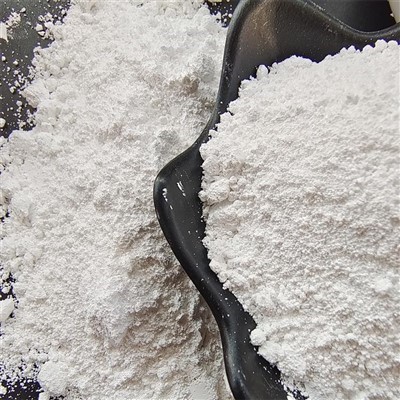
The water – absorbing ability of bentonite is a result of its unique composition and structure. The ion – exchange, hydration, and swelling processes are key mechanisms that allow bentonite to absorb and retain water. Understanding these processes is essential for various industries that rely on bentonite for its water – related properties.
Volcanic Rock If you are in need of high – quality bentonite for your specific application, whether it’s in agriculture, environmental remediation, or construction, I encourage you to reach out to discuss your requirements. Our team of experts is ready to assist you in finding the most suitable bentonite product for your needs. We are committed to providing reliable and efficient bentonite solutions. Contact us to start a procurement discussion and explore how our bentonite can benefit your projects.
References
- Grim, R. E. (1968). Clay Mineralogy. McGraw – Hill.
- Mitchell, J. K. (1993). Fundamentals of Soil Behavior. Wiley.
- ASTM International. (2017). Standard Test Method for Swell Index of Clay Minerals. ASTM D5890 – 17.
Lingshou County LM Mineral Products Co., Ltd.
As one of the most professional bentonite manufacturers and suppliers in China, we’re featured by quality products and good service. Please rest assured to buy customized bentonite made in China here from our factory. Contact us for more details.
Address: Dongzhuang Village, Nanyanchuan Township, Lingshou County, Shijiazhuang City, Hebei Province
E-mail: lmwtwz@163.com
WebSite: https://www.lmwtz.com/
