In the ever – evolving landscape of medical applications, the choice of materials plays a pivotal role in ensuring the success of treatments and the well – being of patients. Two materials that have gained significant attention are medical titanium bars and ceramic materials. As a professional supplier of medical titanium bars, I have witnessed firsthand the unique properties and applications of these two materials, and in this blog, I’ll delve into a comprehensive comparison to help you understand their advantages and limitations in the medical field. Medical Titanium Bars
Mechanical Properties
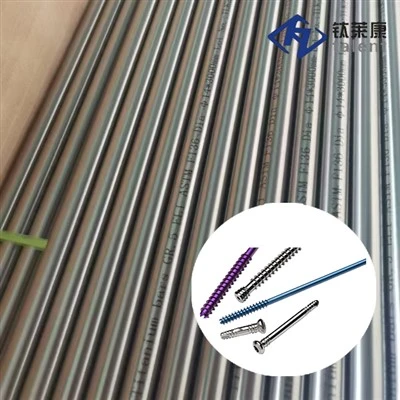
One of the most critical aspects to consider when choosing a material for medical applications is its mechanical properties. Medical titanium bars are renowned for their excellent strength – to – weight ratio. Titanium, a lightweight metal, has a high tensile strength, which means it can withstand large amounts of stress without deforming or breaking. This property is particularly beneficial in orthopedic applications, such as bone plates, screws, and joint replacements. For example, in hip and knee replacements, the ability of titanium bars to support the body’s weight while remaining lightweight reduces the strain on the surrounding tissues and enhances patient mobility.
In contrast, ceramic materials are extremely hard and have high compressive strength. They can endure immense pressure without being crushed. This makes ceramics suitable for applications where hardness is required, like dental implants and wear – resistant components in joint replacements. However, ceramics are brittle, which means they are more likely to fracture under tensile or shear stresses compared to titanium. A small crack in a ceramic component can quickly propagate, leading to catastrophic failure. In orthopedic implants, this brittleness could potentially result in the implant breaking during normal use, which may require additional surgeries to replace it.
Biocompatibility
Biocompatibility is another crucial factor in medical material selection. Medical titanium bars exhibit outstanding biocompatibility. The surface of titanium forms a thin, stable oxide layer when exposed to air or biological fluids. This oxide layer is inert, non – toxic, and does not elicit an immune response from the body. As a result, titanium implants are well – tolerated by the human body, reducing the risk of inflammation, rejection, and infection. Additionally, titanium has a high affinity for bone, promoting osseointegration, the process by which bone tissue grows and adheres to the implant surface. This is essential for the long – term stability and success of orthopedic and dental implants.
Ceramic materials also have good biocompatibility. They are chemically inert and do not release harmful substances into the body. In dental applications, ceramic restorations are often preferred because they closely mimic the appearance and properties of natural teeth, and they are well – accepted by the oral environment. However, in some cases, small debris or particulates from ceramic implants can cause an inflammatory response, especially if the implant is damaged or wears down over time. Although this risk is relatively low, it is still an important consideration compared to the consistently high biocompatibility of titanium.
Corrosion Resistance
Corrosion resistance is vital for medical implants as they are constantly exposed to bodily fluids. Medical titanium bars have excellent corrosion resistance due to the aforementioned stable oxide layer on their surface. This layer acts as a protective barrier, preventing the metal from reacting with the components in bodily fluids, such as salts, acids, and enzymes. Even in the harsh environment of the human body, titanium implants can maintain their integrity over long periods, reducing the risk of corrosion – related failures.
Ceramic materials are also highly corrosion – resistant. Since they are inorganic and chemically stable, they do not corrode in the presence of bodily fluids. This property is particularly important in applications where the implant is in direct contact with aggressive biological environments, such as in the urinary or digestive tracts. However, in some cases, ceramic implants may experience surface degradation due to abrasion or chemical reactions with specific substances in the body, although this is less common compared to the corrosion of metals.
Manufacturing and Machinability
The ease of manufacturing and machinability of a material can significantly impact its cost and availability in medical applications. Medical titanium bars are relatively easy to machine using conventional machining processes, such as turning, milling, and drilling. This allows manufacturers to produce complex implant geometries with high precision, tailored to the specific needs of patients. However, titanium has a high melting point and low thermal conductivity, which can present some challenges during machining, such as increased tool wear and heat generation. Specialized machining techniques and tools are often required to overcome these issues.
Ceramic materials, on the other hand, are notoriously difficult to machine. Their high hardness and brittleness make it challenging to achieve the desired shapes and dimensions with high precision. Machining ceramics often requires specialized equipment, such as diamond – tipped tools and high – energy processes like laser cutting. These processes are time – consuming and expensive, which can limit the widespread use of ceramic implants.
Cost
Cost is an important consideration for both medical device manufacturers and healthcare providers. The cost of medical titanium bars is relatively moderate. While titanium is more expensive than some common metals, such as steel, its excellent properties, such as high strength, biocompatibility, and corrosion resistance, justify the cost. The ease of machining also helps to keep the manufacturing costs under control. Additionally, the long – term durability of titanium implants reduces the need for frequent replacements, which can offset the initial cost.
Ceramic materials are generally more expensive than titanium. The high cost is mainly due to the difficulties in sourcing raw materials, the complex manufacturing processes, and the need for specialized machining equipment. Moreover, the lower yield rate in ceramic manufacturing, due to the high risk of breakage during machining and sintering, further increases the cost. This high cost can be a limiting factor in the widespread adoption of ceramic implants, especially in developing countries with limited healthcare budgets.
Applications
Medical titanium bars are widely used in a variety of medical applications. In orthopedics, they are used for bone fixation devices, such as plates, screws, and intramedullary nails, as well as joint prostheses. Titanium’s ability to promote osseointegration and its mechanical properties make it an ideal choice for these applications. In dental implants, titanium is the gold standard material due to its biocompatibility and long – term stability. It is also used in cardiovascular applications, such as stents and pacemaker cases, where its corrosion resistance and low magnetic susceptibility are advantageous.
Ceramic materials have their niche applications in the medical field. In dentistry, ceramic crowns, bridges, and veneers are popular due to their aesthetic appeal and good biocompatibility. In orthopedics, ceramic components are used in joint replacements, especially in the articulating surfaces, to reduce wear. Ceramic materials are also used in some specialized applications, such as non – magnetic and radiolucent medical devices, because of their unique physical properties.
Conclusion
In conclusion, both medical titanium bars and ceramic materials have their own unique advantages and limitations in medical applications. Medical titanium bars offer a combination of excellent mechanical properties, biocompatibility, corrosion resistance, and relatively easy machinability at a moderate cost. They are suitable for a wide range of medical applications, especially those where strength, flexibility, and long – term stability are required.
Ceramic materials, on the other hand, excel in terms of hardness, aesthetic appeal, and application in certain high – wear or specialized scenarios. However, their brittleness, difficulty in machining, and high cost limit their widespread use.
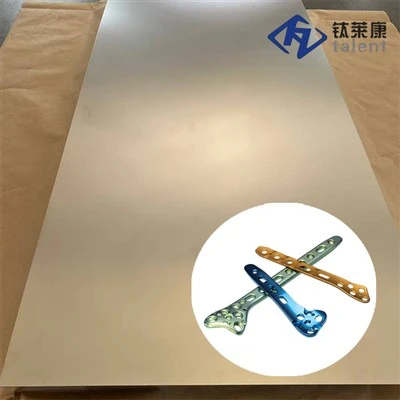
Medical Titanium Plates Ultimately, the choice between medical titanium bars and ceramic materials depends on the specific requirements of the medical application, the patient’s condition, and the cost – effectiveness. As a reliable supplier of medical titanium bars, I understand the importance of providing high – quality products to meet the diverse needs of the medical industry. If you are interested in learning more about our medical titanium bars or have any procurement needs, I encourage you to reach out to us for in – depth discussions and potential partnerships. Let’s work together to improve the quality of medical devices and patient outcomes!
References
- Ratner, B. D., Hoffman, A. S., Schoen, F. J., & Lemons, J. E. (Eds.). (2004). Biomaterials science: An introduction to materials in medicine. Elsevier.
- Pilliar, R. M. (2003). Titanium alloys in total joint replacement—a materials science perspective. Biomaterials, 24(19), 3437 – 3446.
- White, S. N., & Johnston, W. M. (2003). Dental materials science. Mosby.
- Hench, L. L., & Ethridge, E. C. (Eds.). (1982). Biomaterials: An Interdisciplinary Approach. Academic Press.
Baoji Tailaikang High-Tech Metal Materials Co., Ltd.
With abundant experience, we are one of the most professional medical titanium bars manufacturers and suppliers in China. Please feel free to buy medical titanium bars for sale here and get pricelist from our factory. For price consultation, contact us.
Address: No. 1, Southeast Cross of Gaoxin Avenue and Fenghuang 3rd Road, High-tech Development Zone, Baoji City, Shaanxi Province, China
E-mail: sale@tlkjs.com
WebSite: https://www.tlkmetal.com/
