Hey there, if you’ve ever got stuff off the ground—like grain, cement, or even that pile of plastic pellets your factory cranks out—you’ve probably got a bucket elevator humming in the background. I’m part of a bucket elevator conveyor belt supplier team, and let’s be real: most folks don’t stop to think why that belt never slips, never splits, and keeps hauling 10,000 pounds of material up 50 feet without throwing a fit. Today we’re breaking down the core parts of that belt—no fancy jargon, just the real deal from the people who sell, install, and fix these things every single day. Bucket Elevator Conveyor Belt
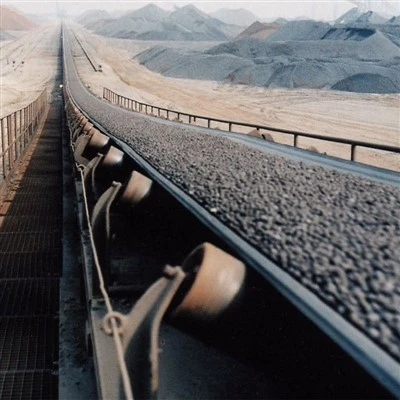
First off, let’s get one thing straight: a bucket elevator belt isn’t just a long strip of rubber (or whatever) with buckets glued on. If that were the case, it’d snap by week two. Every component works together, like a team where nobody slacks. The first, and most important, is the carcass—this is the backbone, the part that takes all the tension, all the pulling force when the belt’s loaded and running. I’ve heard new guys mix this up with the cover, so let’s clear that right now: carcass is the inner load-bearing part, cover is the outer stuff that touches the material.
Carcasses come in two main types, and pick depends entirely on what you’re hauling and how hard your elevator works. The first is fabric-reinforced, which is the most common for most mid-range applications—grain, small aggregates, light chemicals. Think of it like layers of super-tough fabric, usually polyester or nylon, stacked together and bonded tight with rubber. Polyester is rigid, so it stretches less when loaded—perfect for elevators that run steady, no weird start-stop. Nylon’s stretchier, so it’s better for elevators that carry heavier loads or have more dynamic movement, like sudden stops or starts when the factory switches lines. I’ve seen fabric carcasses last 5+ years in a feed mill, no issues, if you pick the right grade. The other carcass is steel cord, and that’s for the heavy lifters—think 100,000+ pound loads, stuff like hot clinker from cement plants, or big rock chunks. Steel cords are way stronger than fabric, stretch almost nothing, and can handle way more tension. Yeah, they’re pricier, but if you’re hauling hot, sharp, heavy stuff? You don’t want to replace a belt every year, trust me.
Next up is the covers—both top and bottom, but the top cover is the one that actually touches your material, and the bottom cover is the part that rubs against the pulleys at the top and bottom of the elevator. Covers aren’t just for show, either. If you’re hauling grain, you need a cover that doesn’t shed rubber into the grain—food-grade, oil-resistant, maybe even UV-stabilized if your elevator’s outside. If you’re moving hot stuff? Like I said, clinker can be 500°F or more, so standard rubber covers melt. You need a heat-resistant cover, usually made from neoprene or even silicone, that can take the heat without breaking down. And if you’re dealing with sharp, abrasive stuff—like gravel or metal shavings—you need a cover that’s super tough, maybe a heavy-duty chloroprene rubber, that won’t get punctured or worn through in a month. I’ve had customers come to me after buying cheap belts that used a standard cover for abrasive material, and they were back in 3 weeks with a split belt. Don’t cut corners here.
Then there’s the buckets themselves—wait, I know the question is about the conveyor belt, but you can’t have a bucket elevator belt without buckets, right? They’re attached to the belt, so they’re a critical component of the whole assembly. Buckets come in different styles, too. There’s the shallow ones for light, free-flowing stuff like grain (you scoop it easily, no spilling), and deep ones for heavier, denser material like cement or ore. There’s even side-discharge buckets for when you’re moving stuff that’s prone to getting stuck, so you can empty it out the side instead of the bottom. Buckets are usually made of plastic (for food, light loads), steel (for heavy stuff), or even stainless steel if you need corrosion resistance, like for salt or chemicals that eat regular steel.
Wait, another key part of the belt is the splices. When you’re making a long belt, you have to connect the two ends, right? That splice is the weakest point if you do it wrong. There are two main types of splices: mechanical and hot-vulcanized. Mechanical splices use metal clips or fasteners, they’re quick to put on, which is good if you need a quick fix in a pinch—but they’re weaker, can wear out faster, and might catch on the buckets or pulleys if not installed right. Hot-vulcanized splices are when you use special rubber and heat to bond the ends together, so it’s almost as strong as the belt itself. Yeah, it takes longer to do—you might need to shut down the elevator for a few hours—but it’s way more reliable, especially for heavy loads or long runs. I always tell customers: if you can afford the downtime to do a vulcanized splice, do it. It’ll save you way more money in the long run.
Oh, and let’s not forget the belt’s edges and the pulleys, wait no—wait, pulleys are part of the elevator, but the belt’s edge protection is on the belt. The edges of the belt are prone to wearing out, especially if they rub against the elevator’s side panels. So a lot of belts have edge covers, or even reinforced edges, so they don’t fray or split over time. I’ve seen a belt that had worn edges, so it started slipping off the top pulley, and that caused buckets to fall all over the factory floor—total mess, cost the customer a whole day of production. Edge protection is a small part, but it matters.
Let me throw in a real example to make this relatable. Last year, I worked with a concrete plant that was hauling aggregate up 60 feet. They were using a cheap fabric carcass belt with a standard rubber cover, and after 6 months, the cover was torn up from the sharp rock, and the carcass was stretched so much the buckets were misaligned. We swapped them out for a steel cord carcass belt with an abrasion-resistant neoprene cover, and added reinforced edges. Now that same belt is going on its third year, no issues, and they haven’t had to clean up rock spills once. That’s the difference between picking the right components and just grabbing whatever’s cheap.
Wait, also—some belts have attachments for the buckets, right? Like the lugs or bolt holes that the buckets mount to. Those are part of the belt, too. If the attachment points are weak, the buckets will pull off, and that’s a big problem. So most good belts have those attachment areas reinforced with extra fabric or steel, so they can handle the weight of the buckets and the material inside. I’ve seen buckets fly off mid-elevator because the attachment points weren’t reinforced—luckily, it was off-hours, so nobody got hurt, but they lost a couple thousand pounds of material. That’s avoidable with the right belt components.
Let me make sure I didn’t miss anything. Carcass (fabric or steel cord, backbone), covers (top and bottom, matched to your material), splices (mechanical vs vulcanized), edge protection, and the bucket attachment points. Yeah, that’s the core of the bucket elevator conveyor belt. A lot of people think it’s just a strip with buckets, but every part is engineered for a specific job. Pick the wrong one, and you’re dealing with breakdowns, spills, lost production, and extra costs.
If you’re in the market for a new bucket elevator belt, or you’re having issues with your current one—like slipping, stretching, worn covers, or buckets falling off—hit us up to chat. We don’t sell one-size-fits-all, either. We’ll ask what material you’re moving, how high you’re hauling it, if it’s hot or sharp or food-grade, and help you pick exactly the components you need, no overpaying for stuff you don’t need. Don’t waste money on a belt that’ll break in a few months—get the right parts from people who know this stuff inside and out.
Conveyor Belt Monitoring System References:
- Conveyor Equipment Manufacturers Association (CEMA). Belt Conveyors for Bulk Materials, 7th Edition.
- Material Handling Industry (MHI). Bucket Elevator Design and Component Specifications.
- Rubber Manufacturers Association (RMA). Standards for Conveyor Belt Construction and Performance.
Alumina Technology (Qingdao) New Materials Co., Ltd.
As one of the most professional bucket elevator conveyor belt manufacturers and suppliers in China, we also support customized service. With abundant experience, we warmly welcome you to buy bucket elevator conveyor belt for sale here and get quotation from our factory. For price consultation, contact us.
Address: No.448, Jiangshan South Road, Huangdao District, Qingdao City, Shandong Province
E-mail: Gloria.zhang@contitech.cn
WebSite: https://www.altechconveyorbelt.com/
