Hey there, fellow folks who work with heavy machinery or are just curious about what makes those motors safe in super volatile environments. I’ve been in the explosion proof motor game for over a decade now, and let me tell you—when someone asks me what testing standards we use to make sure our motors don’t become a hazard, I don’t just rattle off a list of acronyms (though acronyms do come up a lot in this field). Today, I wanna break this down like I would to a new tech who just joined our team at the shop. No stuffy jargon overload, just real talk about the standards that keep our motors (and our clients’ sites) from blowing up. Explosion Proof Motor
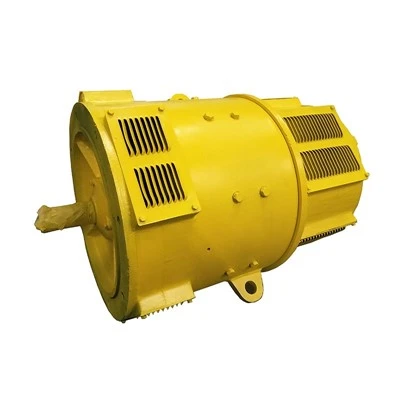
First off, let’s get one thing straight: explosion proof motors aren’t “explosion-proof” in the sense that they stop an explosion from happening. Nah, they’re built to contain an internal explosion if one does start, and make sure that hot gases or sparks don’t leak out to ignite all the flammable stuff around—think gas refineries, chemical plants, grain silos, even places where they make or store certain dusts or vapors. So the testing isn’t trivial. It’s rigorous.
Let’s start with the big one in North America, and honestly, a lot of other countries either align with this or reference it: UL 674. UL stands for Underwriters Laboratories, and they’re the guys who test everything from power strips to toasters, but their standard for explosion proof motors is next level. Wait, what does UL 674 actually cover? From what I’ve seen on the line, it’s all about the enclosure being strong enough to hold an internal explosion. We’re talking pouring super hot, flammable gases into the motor’s casing and lighting ’em up—like, controlled, lab-tested explosions—to make sure the casing doesn’t crack or blow out. But not just that: they also check the temperature of the outside surface after that blast. If it’s too hot, it could ignite the surrounding stuff, so it has to stay below the ignition point of whatever flammable material the motor might be near. I remember one time we had a batch of motors fail a UL 674 test because the surface temp was a little too high after the internal blast. We went back to tweak the ventilation grilles a tiny bit, and boom—passed. No big deal, but that’s exactly why the standard’s there.
Then there’s the IECEx system, which is huge internationally, especially in Europe, Asia, and a bunch of other regions that don’t just follow North American standards. IECEx is all about mutual recognition, right? So if a motor’s certified under IECEx, it’s supposed to be accepted in any country that’s part of the scheme. The main standard here is IEC 60079-1, which is for explosion proof enclosures. What’s different about IEC 60079-1 from UL 674? Well, the test pressures are a bit different, and they focus a lot more on dust hazards too—since IEC covers a wider range of global environments, some places have more dust-heavy sites than others. We had a client in India a couple years back who insisted on IECEx certification for a grain processing plant, and we had to run extra tests on the motor’s seals to make sure grain dust couldn’t get in, which is a big part of IEC 60079. Oh, and another thing: IEC 60079 also tests the thread integrity of the motor’s bolts. Those bolts need to stay tight even after an explosion, right? So they crank ’em to a specific torque, run the blast test, and check if any threads stripped or loosened. That’s a detail I didn’t even realize mattered until we had to do that extra step for that Indian client.
Wait, can’t forget about ATEX. A lot of people mix ATEX and IECEx up, but ATEX is more of the EU’s specific directive, right? The actual standard numbers are EN 60079, which is just the European version of IEC 60079. ATEX is mandatory for any explosion proof equipment sold in the EU, so it’s non-negotiable there. What ATEX adds that IECEx might not emphasize as much? It’s all about labeling and documentation. Every motor that gets ATEX certified has a super specific label with codes that tell you exactly what environments it’s safe for—like, Class I, Div 1 (wait, that’s another North American term) vs. Zone 1. Oh right! Class and Division vs. Zone—those are two different classification systems. Class is North America, Zone is international (ATEX/IECEx). Class I is for gas/vapor, Class II is for dust, Class III is for fibers, which is another whole thing. Division 1 means the hazardous material is present all the time or most of the time, Division 2 means it’s only present occasionally. Zones 0, 1, 2 for gas—Zone 0 is same as Div 1, Zone 1 is also frequent, Zone 2 is occasional. So testing standards have to match that classification. For example, a motor rated for Class I, Div 1 has way stricter leak testing than one rated for Class I, Div 2. We’ve had clients come in and say “we need Zone 2 motors” and we make sure the standards align with that, because the testing is less extreme than Zone 1, but still enough to keep things safe.
Another big one I run into is NEMA standards, specifically NEMA MG 1 Part 25. NEMA is the National Electrical Manufacturers Association, and their MG 1 covers motor construction, while Part 25 is all about hazardous locations. Wait, MG 1 Part 25 ties in with UL 674, right? A lot of motors get both certifications. NEMA’s testing here focuses on things like how the motor’s wiring connections are sealed, the material of the enclosure (they usually use cast iron or aluminum, but even the type of aluminum matters—some alloys are more spark-resistant than others). We had a problem a while back where a batch of aluminum enclosures had a tiny flaw in the casting, so when we ran the NEMA MG 1 leak test, it failed because a small amount of gas got through. We switched to a different casting supplier, and that fixed it. It’s stuff like that—tiny, almost unnoticeable defects—that standards catch.
Wait, what about newer standards? I remember a few years back, there was a push for more testing on the motors’ performance in extreme temperatures. Like, if a motor’s being used in the Arctic, it needs to work at super cold temps, but also not get too hot in the desert. So now both UL and IEC have updated their standards to include temperature cycling tests—they cool the motor down to like -40°F and heat it up to 104°F, over and over, to make sure the seals and casing don’t crack from thermal expansion and contraction. That’s a big one because old motors might’ve worked fine in moderate temps, but today’s clients are using these motors in way harsher places. We had a project in Alberta a couple years ago where the client needed motors that could handle -30°F, so we had to run those temperature cycle tests, and that added a week to the testing timeline, but it’s totally worth it—no point selling a motor that passes the blast test but fails in the cold.
Let me also talk about something that’s super important but often overlooked: third-party verification. You can’t just test a motor in your own lab and call it certified. All these standards require independent testing by accredited labs. Like, UL has their own labs, and IECEx has a list of accredited certification bodies. We send every batch of motors we produce to a third-party lab for testing—we don’t cut corners here, because if we did, and a motor failed in the field, that’s not just a problem for us, that’s a safety hazard for the client’s workers. I once had a client who tried to use a cheap, uncertified explosion proof motor on a rig in the Gulf of Mexico. It failed a pressure test (not by our motors, obviously—we never sell uncertified stuff) and leaked gas, and they had to shut down operations for a week. That’s why I always tell clients: don’t go for the cheapest motor, go for one that’s properly tested to the right standards.
Wait, what about dust explosion testing? A lot of people only think about gas and vapor, but dust is just as bad—grain, wood, metal, even plastic dust can ignite if it’s the right concentration. The standard for dust is IEC 60079-31, right? That’s for dust explosion protection. We had a client in a lumber mill who needed motors rated for Class II, Div 1 (dust), so we had to run tests where we blew fine wood dust into the test chamber and ignited it, making sure the motor’s enclosure kept the flame in. Those tests are pretty wild—you see a cloud of wood dust go up, and if the motor’s good, it stays contained inside. We’ve never failed a dust test, but we’ve had to adjust the air filters on the motor’s cooling system to keep dust out, which is part of the IEC 60079-31 testing.
Let me wrap this up a little, because I know I’ve thrown a lot of standards at you, but here’s the thing: every client’s site is different. A refinery in Texas needs motors tested to UL 674 and Class I, Div 1. A chemical plant in Germany needs EN 60079 (ATEX) and Zone 1. A grain silo in Canada needs IECEx and Class II, Div 2. The testing standards change based on the location, the type of hazardous material, and the site’s specific conditions. The last thing I want is for a client to install a motor that’s not certified, because that’s a risk no one should take.
If you’re shopping around for explosion proof motors, don’t just ask “are these explosion proof?” Ask “what testing standards are they certified to?” And make sure the standards match your site’s classification. If you’re not sure what classification your site is, we can help you figure that out too—we’ve got a team that knows all these standards inside and out, and we’ll walk you through every step so you get the right motor for the job, no guesswork. We’ve been supplying these motors for years, and our clients range from small local plants to big international corporations, and every one of them trusts us because we don’t skip on the testing.
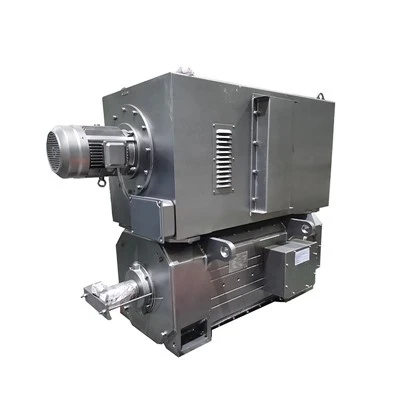
If you have any questions, or you’re ready to chat about what motor you need for your site, feel free to reach out. We can talk through the standards, the testing, and make sure you get something that’s safe, reliable, and fits your budget. No pressure, just real talk about something that matters—keeping people and sites safe.
DC Motor References:
- Underwriters Laboratories. UL 674: Standard for Electric Motors and Generators for Use in Hazardous (Classified) Locations.
- International Electrotechnical Commission. IEC 60079-1: Explosive atmospheres – Part 1: Equipment protection by flameproof enclosures “d”.
- International Electrotechnical Commission. IEC 60079-31: Explosive atmospheres – Part 31: Equipment dust ignition protection by enclosure “t”.
- National Electrical Manufacturers Association. NEMA MG 1 Part 25: Motors and Generators – Hazardous Locations.
- European Commission. Directive 2014/34/EU (ATEX): Equipment and protective systems intended for use in potentially explosive atmospheres.
Xian Putai Electric Motor Equipment Co., Ltd.
Xian Putai Electric Motor Equipment Co., Ltd. is one of the most professional explosion proof motor manufacturers and suppliers in China, also supports customized service with low price. Welcome to buy advanced explosion proof motor in stock here from our factory. If you have any enquiry about quotation, please feel free to email us.
Address: Haibo Guangchang Fengcheng Nine Road Economical & Technological Development District Xi’an City Shaanxi Province – China
E-mail: sales@putaimotor.com
WebSite: https://www.putaimotor.com/
