What is the maximum flow rate through clear PVC tubing?
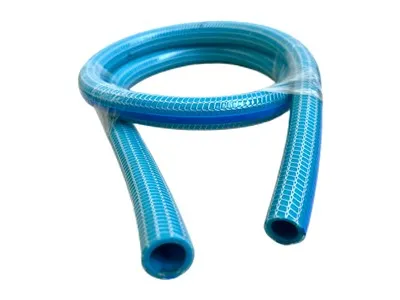
As a supplier of clear PVC tubing, I often get asked about the maximum flow rate that our tubing can handle. This is a crucial question for many of our customers, as it directly impacts the efficiency and effectiveness of their systems. In this blog post, I’ll delve into the factors that determine the maximum flow rate through clear PVC tubing and provide some guidelines to help you make the right choices for your applications. Clear PVC Tubing
Understanding Flow Rate
Flow rate is the volume of fluid that passes through a given cross – sectional area of a pipe or tubing per unit of time. It is typically measured in units such as liters per minute (L/min), gallons per minute (GPM), or cubic meters per hour (m³/h). The maximum flow rate through clear PVC tubing is not a fixed value; it depends on several key factors.
Factors Affecting the Maximum Flow Rate
Tubing Diameter
One of the most significant factors influencing the flow rate is the diameter of the clear PVC tubing. According to the Hagen – Poiseuille’s law for laminar flow in a cylindrical pipe, the flow rate (Q) is proportional to the fourth power of the radius (r) of the pipe. Mathematically, (Q=\frac{\pi r^{4}\Delta P}{8\mu L}), where (\Delta P) is the pressure difference across the ends of the tube, (\mu) is the dynamic viscosity of the fluid, and (L) is the length of the tube.
In practical terms, a larger diameter tubing allows for a higher flow rate. For example, if you compare a 1/4 – inch diameter clear PVC tubing with a 1 – inch diameter tubing, the 1 – inch tubing can carry a significantly larger volume of fluid. This is because the cross – sectional area of a pipe is calculated using the formula (A = \pi r^{2}), and as the radius increases, the area available for fluid to flow through increases exponentially.
Fluid Viscosity
The viscosity of the fluid being transported through the clear PVC tubing also plays a crucial role in determining the maximum flow rate. Viscosity is a measure of a fluid’s resistance to flow. Fluids with high viscosity, such as honey or thick oils, flow more slowly than fluids with low viscosity, like water.
When dealing with high – viscosity fluids, the flow rate through the tubing will be lower compared to low – viscosity fluids, even if all other factors remain the same. This is because the internal friction within the fluid makes it more difficult to move through the tubing. To achieve a reasonable flow rate for high – viscosity fluids, you may need to increase the pressure or use a larger diameter tubing.
Pressure
The pressure difference between the two ends of the clear PVC tubing is another important factor. A higher pressure difference will drive the fluid through the tubing at a faster rate. However, there are limits to the pressure that clear PVC tubing can withstand.
Clear PVC tubing has a certain pressure rating, which indicates the maximum pressure it can handle without bursting or deforming. Exceeding this pressure rating can lead to safety hazards and damage to the tubing. So, while increasing the pressure can increase the flow rate, it must be done within the safe operating limits of the tubing.
Tubing Length
The length of the clear PVC tubing also affects the flow rate. As the length of the tubing increases, the resistance to flow also increases. This is because the fluid has to overcome more friction as it travels through a longer tube.
For long – distance applications, you may need to use a larger diameter tubing or increase the pressure to maintain an acceptable flow rate. In some cases, it may also be necessary to install additional pumps or pressure – boosting devices to compensate for the increased resistance.
Calculating the Maximum Flow Rate
While there are theoretical formulas like the Hagen – Poiseuille’s law for laminar flow, in real – world applications, the flow is often turbulent, and the calculations become more complex. Many manufacturers, including us, provide flow rate charts based on empirical data.
These charts take into account different tubing diameters, fluid viscosities, and pressure differentials to give you an estimate of the maximum flow rate. To use these charts, you need to know the properties of the fluid (viscosity), the diameter of the tubing, and the pressure difference across the tubing.
For example, if you are using water (a low – viscosity fluid) and a 3/8 – inch diameter clear PVC tubing with a pressure difference of 10 psi, you can refer to our flow rate chart to find out the approximate maximum flow rate.
Applications and Flow Rate Requirements
Different applications have different flow rate requirements. In the medical field, for example, clear PVC tubing is often used for intravenous (IV) fluid delivery. The flow rate in these applications is typically very low, usually in the range of a few milliliters per hour to a few hundred milliliters per hour. This is because precise control of the fluid delivery is crucial for patient safety.
In industrial applications, such as chemical processing or water treatment, the flow rate requirements can be much higher. For instance, in a water treatment plant, large – diameter clear PVC tubing may be used to transport water at flow rates of several hundred gallons per minute.
Our Clear PVC Tubing and Flow Rate
We offer a wide range of clear PVC tubing with different diameters and pressure ratings to meet the diverse needs of our customers. Our tubing is made from high – quality PVC material, which ensures excellent chemical resistance and durability.
We understand that getting the right flow rate is essential for the success of your applications. That’s why we provide detailed technical support to help you select the appropriate tubing for your specific requirements. Our team of experts can assist you in calculating the maximum flow rate based on your fluid properties, pressure, and tubing length.
Conclusion
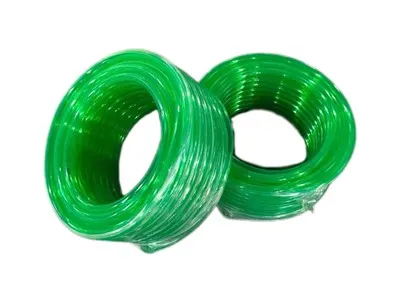
Determining the maximum flow rate through clear PVC tubing is a complex process that involves considering multiple factors such as tubing diameter, fluid viscosity, pressure, and tubing length. By understanding these factors and using the appropriate tools and resources, you can select the right clear PVC tubing for your applications and ensure optimal performance.
Garden Hose If you are in the market for clear PVC tubing and need help with determining the flow rate or selecting the right product, we are here to assist you. Our experienced team can provide you with the technical expertise and support you need to make an informed decision. Don’t hesitate to reach out to us for more information and to start a discussion about your specific requirements.
References
- Incropera, F. P., & DeWitt, D. P. (2002). Fundamentals of Heat and Mass Transfer. John Wiley & Sons.
- White, F. M. (2011). Fluid Mechanics. McGraw – Hill.
- Manufacturers’ technical data sheets on clear PVC tubing.
Weifang Xinzhiyuan Plastic Co., Ltd.
As one of the most experienced clear pvc tubing manufacturers and suppliers in China, we offer a wide range of products with superior quality. Please feel free to wholesale premium clear pvc tubing made in China here from our factory. We also accept customized orders.
Address: No. 700, Tongle Street, Economic Development Zone, Changle County, Weifang City, Shandong Province
E-mail: hua@xzypvchose.com
WebSite: https://www.pvchose-xzy.com/
