When I walk through industrial parks, housing estates, and downtown commercial zones, one piece of equipment I see installed on street corners, next to sidewalks, and at the edge of construction sites more than any other is the outdoor prefabricated enclosed ring main unit (RMU). For anyone in the power distribution space, this isn’t a surprise: these units are designed to keep power flowing reliably, split and distribute electricity to multiple load points without the complexity of older overhead wiring systems that leave much of the grid exposed to the elements. As a supplier who’s worked with these units for over a decade, I’ve seen them solve countless pain points for utilities and infrastructure teams—but I’ve also spent just as much time troubleshooting issues that stem from security risks many people don’t even consider when they approve a purchase. The biggest misconception out there is that “outdoor enclosed” automatically means “secure.” Today I want to break down the real, actionable security risks we encounter in the field, what my team and our customers do to mitigate them, and why picking the right supplier makes all the difference in avoiding costly, even dangerous, downtime. Outdoor Prefabricated Enclosed Ring Main Unit

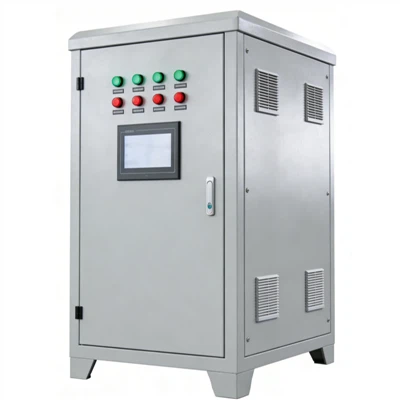
First, let’s get one definition straight so we’re all on the same page: an outdoor prefabricated enclosed RMU is a compact, fully factory-assembled switchgear unit that holds high-voltage circuit breakers, fuses, and switches in a weather-resistant metal enclosure, meant to be sited outdoors without a permanent building or shelter. They’re smaller than traditional indoor switchgear, easier to transport, and faster to install—hence why they’re the go-to for temporary power at construction sites, permanent power to new housing developments, and backup power for grid upgrades. But that portability and outdoor placement is exactly where the first security risk starts: physical access isn’t as controlled as it is in a fenced electrical substation. Most standard RMUs are built with padlocks, and while those might keep out a curious kid or a stray animal, they’re trivial for someone with basic tools to bypass. On multiple occasions, my service team has responded to a call about a unit tripping unexpectedly, only to find that a utility worker didn’t re-lock the enclosure after a maintenance check, or that a neighbor pried the lock open to “look at the cool box” and brushed against the internal busbars. Last year, we had a customer in a mid-sized city who had a vandal damage a 10kV RMU on a residential side street—someone kicked the enclosure hard enough to crack the weather seal, and over the course of a week, rain seeped into the unit’s interior and shorted the circuit, knocking out power to 120 homes for 18 hours. That could have been avoided if the RMU had a more robust locking system, or if it was sited behind a low fence, but when utilities are working on tight timelines, the first thing they cut corners on is site perimeter security for these units. It’s not just vandalism, either: animal intrusions are a persistent, underdiscussed risk. Squirrels, rats, even raccoons can squeeze through gaps as small as half an inch around poorly sealed enclosure doors, and once they get inside, they chew through wiring or build nests that cause overheating and arcing. We once had a call from a customer about a repeat fault on a network of three RMUs near a wooded area; after investigating, we found that a family of raccoons had nested in the top of each unit, and their nesting material was blocking the ventilation grilles designed to keep internal components cool. The fix wasn’t just removing the nests—it was retrofitting all three units with fine mesh screens over the grilles to keep animals out, a small, low-cost upgrade that prevents thousands in downtime.
Next, and this is one that’s only gotten bigger as we move toward smart grid technology, is cybersecurity risk. A decade ago, almost all outdoor RMUs were passive, mechanical devices—they just switched power on and off, no digital controls, no connection to the internet or utility SCADA systems. Today, most new RMUs have remote monitoring and control capabilities, which let utilities adjust load, perform maintenance checks, and respond to outages faster. That’s a huge win for reliability, but it also creates a new attack surface. I’ve seen too many cases where customers bought a low-cost RMU from a supplier that cut corners on cybersecurity, using generic, default login credentials for the remote access portal. In one instance a few years ago, a small municipal utility installed 15 new outdoor RMUs across their service area, all with the same default username and password for their remote management system. A hacker in another state found the units after scanning for unsecured SCADA-connected devices, and was able to manipulate the circuit breakers to cut power to a municipal water treatment plant for two hours. The result was a boil-water advisory for 50,000 residents, and over $200,000 in cleanup costs for the utility. That’s not an isolated incident—there have been multiple reports of cyberattacks targeting outdoor grid equipment in the last five years, and RMUs are a primary target because they’re often connected to the internet, located in unmonitored areas, and don’t have the same cybersecurity hardening that indoor switchgear in controlled substations gets. What makes this even more frustrating is that this risk is completely avoidable. When we design our RMUs, we integrate end-to-end encryption for remote communication, unique, per-unit login credentials that can be updated remotely, and regular firmware over-the-air updates to patch any vulnerabilities. But many smaller suppliers don’t invest in that cybersecurity work, because it adds a small cost to each unit. Utilities that pick the cheapest option on RMUs almost always end up paying more in the long run when a cyber breach happens.
Another security risk that’s often overlooked is environmental tampering, but this isn’t from nature—it’s from intentional acts to disrupt power for political or economic reasons. Outdoor RMUs are highly visible, easy to access, and they control power to critical infrastructure like hospitals, schools, and water treatment plants. We’ve had customers in regions with frequent civil unrest report that their RMUs have been targeted by protesters or activists, who’ve damaged enclosures or disconnected wiring to cut power to commercial businesses or government facilities. Even outside of crisis situations, theft of RMU components is a growing problem. Copper wiring is the most commonly stolen metal, and RMUs have a lot of it—busbars, connection cables, even the small copper coils in fuses. Thieves will target outdoor RMUs because they don’t have to breach a large, secure substation; they can show up at 2 a.m. with a bolt cutter, snip the copper, and haul it away before anyone notices. A customer in the Midwest told us last year that they had five RMUs vandalized in a single month, with copper wiring stolen from each unit. The cost to replace the wiring and get the power back on was over $15,000, and the downtime disrupted local manufacturing plants that rely on that power to run assembly lines. Again, this is a risk that can be mitigated, but only if the RMU is designed with theft in mind. Some suppliers use aluminum wiring instead of copper, but aluminum is less reliable for high-voltage applications. Our solution is to use specialized anti-tamper wiring connectors that break if someone tries to force them open, and we mark all components with unique serial numbers that make them traceable if they end up in scrap yards. We also work with our customers to recommend optimal siting: placing RMUs near well-lit areas, not hidden behind bushes or out of sight, which discourages both tampering and theft.
I want to be clear here: these risks don’t mean that outdoor prefabricated enclosed RMUs are a bad choice. They’re one of the most reliable, cost-effective pieces of power distribution equipment ever invented, and there’s no replacement for them in most grid projects. The problem is that too many people treat them like a commodity, picking the cheapest unit from a supplier that cuts corners on security to save a few dollars upfront. As someone who’s been building and servicing these units for years, I’ve seen that the difference between a RMU that works for 20 years without a major issue and one that causes recurring problems is almost always the attention to security design in the factory, not the price tag.
Over the years, my team has refined our approach to addressing these risks, and we share that knowledge with every customer we work with. We don’t just sell a unit and walk away—we provide a full security audit for each site, recommending where to place the RMU, what locking and sealing upgrades to add, how to secure remote access, and even how to train on-site maintenance teams to spot potential issues before they turn into problems. For example, when a customer is installing an RMU near a wooded area, we add the mesh screens over the grilles at no extra cost, instead of making them retrofits later. For utilities with concerns about theft, we offer anti-tamper wiring and engraving for every component. For remote monitoring, we work with them to set up two-factor authentication for all login accounts, and we conduct annual security audits of the RMU’s software to patch any vulnerabilities.
If you’re in the market for outdoor prefabricated enclosed RMUs for your next project, my advice is to look beyond the price tag. Ask your potential supplier about their approach to physical security, cybersecurity, and anti-theft design. Ask them for references from other customers who’ve had issues with downtime or security breaches, and see how those were resolved. The small extra cost to work with a supplier that prioritizes security will save you thousands, and potentially millions, in the long run. If you have questions about security risks for RMUs, or if you’re ready to start planning your next power distribution project, feel free to reach out to our team to discuss your needs and get a tailored solution.
Step Down Transformer References
- International Electrotechnical Commission (IEC) 62271-200, High-voltage switchgear and controlgear – Part 200: AC metal-enclosed switchgear and controlgear for rated voltages above 1 kV and up to and including 52 kV
- North American Electric Reliability Corporation (NERC), 2023 Grid Security Trends: Distributed Energy and Small-Scale Grid Infrastructure Vulnerabilities
- Institute of Electrical and Electronics Engineers (IEEE), 2022 Study on Physical and Cybersecurity Risks of Outdoor Distribution Switchgear
- Copper Development Association, 2021 Report on Metal Theft from Power Distribution Infrastructure in North America
Huachi Electric Co., Ltd.
We’re well-known as one of the leading outdoor prefabricated enclosed ring main unit manufacturers in China, featured by quality products and good service. Please rest assured to buy customized outdoor prefabricated enclosed ring main unit made in China here from our factory. Contact us for more details.
Address: Plastic Park, Tongyu Street, Luqiao District, Taizhou City, Zhejiang Province
E-mail: HCDQ2026@163.com
WebSite: https://www.huachi-electric.com/
