Hey there! If you’re a manufacturing engineer, parts buyer, or someone who’s ever wondered what goes into the tiny, often overlooked auto stamped welded components that hold a vehicle together, you’ve come to the right place. I’m part of the team that makes those “other” auto stamped welded parts—you know, the ones that aren’t engine blocks, chassis rails, or the obvious big-ticket stuff. Think door hinges, bracket mounts for sensors, fuel line clamps, seatbelt reinforcement brackets, and the little tabs that hold wiring harnesses in place. We deal with hundreds of these every week, and let me tell you, the materials we use aren’t one-size-fits-all. They’re picked for a reason, and today I’m breaking down what we reach for, why, and when each makes sense. Other Auto Stamped Welded Components
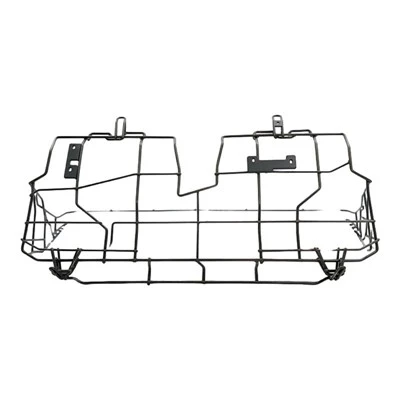
First off, let’s get one thing straight: these parts aren’t just stamped out of random metal. We have to balance cost, strength, weight, corrosion resistance, and formability because 9 times out of 10, these components have to bend slightly, hold up under vibration, or survive being out in the rain and road salt for years. The most common material we use is low carbon steel, also called mild steel. Let’s be real—if you’re making a bracket that holds a taillight wiring harness, you don’t need something fancy. Low carbon steel is cheap, super easy to stamp into all those weird little shapes we need, and welds like a dream. We usually go with grades like 1008 or 1010 for most standard parts. Last month, we knocked out 12,000 seatbelt anchor brackets for a compact SUV using 1010 steel—worked perfectly. It’s strong enough to handle the force of a seatbelt during a crash, thin enough to stamp without warping, and way cheaper than any alloy we could use. The only downside? It rusts like crazy if it’s not coated. So almost every low carbon steel part we make gets a zinc coating, either hot-dip galvanized or electrogalvanized, to keep it from turning into a mess on the highway.
Wait, but what if the part needs a bit more oomph? Like, say, a bracket that mounts the exhaust system’s oxygen sensor? That’s exposed to high temperatures, road grime, and constant vibration from the engine. For stuff like that, we turn to high-strength low-alloy (HSLA) steel. HSLA steel has a tiny bit of other metals—like manganese, chromium, or vanadium—added to it, which makes it way stronger than low carbon steel without adding much weight. That’s a big deal for auto makers, because every pound they can shave off a car helps with fuel efficiency. We use HSLA grade 350 for most of our exhaust brackets and engine mount tabs. Last quarter, we had a run of 8,000 sensor mounting brackets for a pickup truck, and HSLA was the only steel that didn’t crack when we stamped the sharp bends needed to fit around the exhaust manifold. It welds just as easy as mild steel too, so we didn’t have to change our welding process at all. Win-win.
But sometimes steel isn’t the best call. What if we need a part that’s light, super corrosion-resistant, and doesn’t conduct too much electricity? That’s where aluminum comes in. We don’t use aluminum for most of our parts—cost is way higher than steel, so we reserve it for specific jobs. Like, take the brackets that hold a car’s side mirror housing. Those need to be light to keep the mirror from sagging, and they’re right out in the elements. Aluminum alloys like 5052 or 6061 are our go-to here. 5052 is great because it’s really formable, so we can stamp those tiny, curved tabs that lock the mirror into place, and it has pretty good corrosion resistance on its own. We did a run for an electric SUV’s mirror brackets last summer, and aluminum was perfect because it’s also non-magnetic, so it doesn’t interfere with the mirror’s small motor or any sensors behind it. The only catch with aluminum? Welding it is trickier than steel. We have to use a MIG welder with a special argon gas mix, and we have to make sure the surface is totally clean before welding—any oil or oxidation will cause weak spots. But when the part needs to be light, it’s worth the extra work.
And then there’s stainless steel. Wait, when do we use that? Mostly for parts that are exposed to really harsh environments, like the undercarriage of a car or parts near the exhaust system that get super hot. We use 304 stainless for things like fuel line clamps that sit right above the exhaust. Stainless steel doesn’t rust at all, even if it’s splashed with road salt, and it can handle temperatures up to like 1,500 degrees Fahrenheit without warping. We did a big order last year for a semi-truck’s fuel line clamps, and stainless was non-negotiable because those trucks drive through snow and salt all winter. The downside? Stainless is way harder to stamp than steel, so we have to run our presses slower and use different dies. It’s also way more expensive, so we only use it when there’s no other option. We tried using galvanized steel for those semi clamps once, but after a few months, the salt ate through the zinc and the steel started rusting. That was a costly mistake, so now we stick to stainless for those tough underbody parts.
Wait, let’s not forget about galvanized steel vs. cold-rolled steel. A lot of people mix these up. Cold-rolled steel is just low carbon steel that’s been rolled at room temperature, so it’s smooth and has good dimensional accuracy. We use cold-rolled steel for parts that need a nice finish, like the brackets that hold interior door handles—no one wants a rough, rusty-looking bracket inside their car. Galvanized steel is cold-rolled steel with that zinc coating we talked about, used for exterior parts where rust is a risk. We also use prepainted steel sometimes, mostly for trim brackets that go on the outside of a car. It’s already painted, so we don’t have to do any extra finishing after stamping, which saves time and money.
Oh, and what about specialty materials? Every now and then, we get a weird request, like a part that needs to be impact-resistant but also flexible. For those, we use high-density polyethylene (HDPE) coated steel, or even a mix of steel and plastic? No, wait, no—most of our stamped welded parts are metal, but sometimes we add a plastic insert for vibration dampening. But the base material is almost always metal. We did a run of wiring harness clips for a hybrid car last year, and the client wanted a part that wouldn’t buzz against the metal chassis. We stamped a low carbon steel clip, then molded a small HDPE insert onto it during the welding process. That kept the vibration down and stopped annoying noise inside the car.
Let me also tell you about a common mistake I see new engineers make: picking a material just because it’s cheap, not because it fits the job. A few months back, a client tried to get us to make a seatbelt bracket out of plain mild steel, no zinc coating, because it was 10 cents cheaper per part. But those brackets are under the seats, so they get splashed with floor cleaner and rainwater. Without the zinc, the steel would have rusted through in 2 years, and that’s a safety issue—if the seatbelt breaks in a crash, that’s a huge problem. We had to explain that, and they ended up going with the galvanized steel. It cost a bit more, but it saved them from warranty claims and bad press. That’s why at our shop, we don’t just take orders—we tell clients what works and what doesn’t. We’ve been in this game for 15 years, so we’ve seen the mistakes, and we’re happy to steer people right.
Another thing: welding compatibility. A lot of people forget that the material you stamp has to weld well, because these parts are almost always welded to something else. For example, aluminum welds great if you do it right, but if you try to spot weld it like steel, it’ll blow holes. Stainless steel requires more heat than mild steel, so our welders have to adjust their settings. That’s why we test every material before we start a big run. We’ll stamp a sample part, weld it to a test piece, and pull it apart to make sure the weld is strong enough. No one wants a part that falls apart on the assembly line.
What about future materials? We’re starting to work more with advanced high-strength steel (AHSS) for parts that need to be super strong but light. AHSS has even more alloying elements than HSLA, and it’s way stronger. Auto makers are pushing to make cars lighter to hit fuel efficiency and electric range targets, so AHSS is becoming more common. We just did a small run of battery tray brackets for an EV using AHSS, and it worked great. It’s a bit pricier than regular steel, but the weight savings are worth it. We’re also looking at using more recycled steel—most of our mild steel is already recycled, but we’re testing more post-consumer recycled steel to cut down on our carbon footprint. Clients love that, especially the EV brands that are big on sustainability.
Let’s circle back to the “other auto stamped welded components” part—this stuff is everywhere, and no one thinks about it until it breaks. A door hinge that rusts through, a sensor bracket that cracks, a fuel line clamp that comes loose—these small parts can cause big problems. That’s why picking the right material is so important. It’s not just about getting a part that fits; it’s about getting a part that lasts, is safe, and doesn’t cost an arm and a leg.
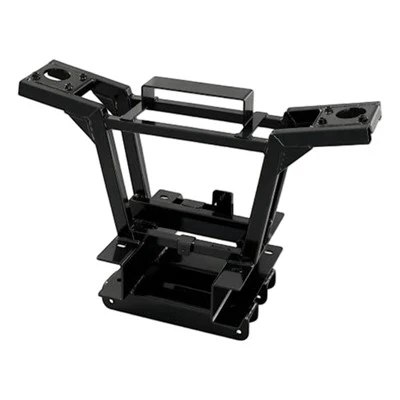
At the end of the day, we’re not just a supplier of stamped welded parts. We’re the people who troubleshoot, who test materials, who make sure your parts work for your specific application. If you’re looking for components—whether it’s brackets, clamps, hinges, or something else—and you’re not sure what material is right, hit us up. We’re here to answer questions, adjust designs, and get you parts that meet your needs, no matter how big or small your order is. Don’t waste time guessing which material will work; let us help you get it right the first time.
Car Interior Trim References
- ASM International. (2019). Materials for Automotive Body and Structural Components. ASM Handbook, Volume 14: Metalworking: Sheet Forming.
- The American Iron and Steel Institute. (2022). Automotive Steel Grades: A Guide for Manufacturers.
- Aluminum Association. (2021). Aluminum Automotive Applications: Design and Material Selection.
- International Organization for Standardization. (2020). ISO 12084: Weldability of Steels – Test Methods.
- Transport Research Laboratory. (2021). Corrosion Performance of Automotive Materials in Road Salt Environments.
Suzhou Yehe Precision Stamping Co., Ltd.
With abundant experience, we are one of the most reliable auto stamped welded components manufacturers and suppliers in China. We warmly welcome you to buy customized auto stamped welded components at competitive price from our factory. If you have any enquiry about quotation, please feel free to email us.
Address: No.5, Beifang Road, Changshu City, Suzhou, Jiangsu Province, China.
E-mail: szyh06@yehejingmi.com
WebSite: https://www.yehe-precision.com/
