If you’ve ever stood in a hardware store, backyard gathering, or commercial catering supply shop, you’ve likely reached for a barbecue grill mesh without giving its color much thought. It’s a small, utilitarian part of the grilling setup—just a grid of metal meant to hold burgers, veggies, or skewers over fire—until you start digging into why it shows up in the shades it does, and why that matters for anyone buying grill mesh for personal or professional use. As a supplier of barbecue grill mesh, I get dozens of questions a week about its color, so let’s break this down with the science, manufacturing, and practical use in mind. Barbecue Grill Mesh
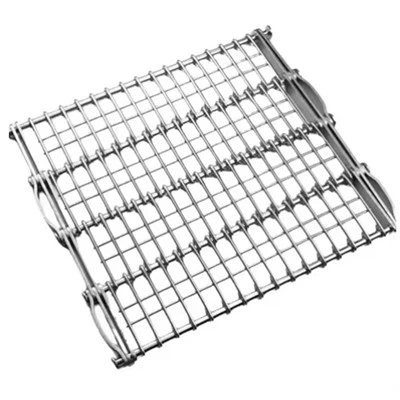
First, let’s address the most common question: the typical color of a standard grill mesh isn’t a single shade, but it falls into a small range that stems directly from what the mesh is made of and how it’s processed. Most grill mesh sold today is made from stainless steel, carbon steel, or sometimes iron, each with its own baseline color that’s adjusted during finishing to be durable and grilling-friendly. Raw stainless steel, for example, has a faint silver, almost gunmetal sheen, but that’s rarely how you see it on a grill. Carbon steel, which is cheaper and common for heavy-use commercial setups, starts as a dull gray, almost matte iron tone. The most standard color you’ll see on store shelves, though, is a muted, non-reflective silver—sometimes called “grill gray” in the industry, a term we use to distinguish it from polished silver or bright chrome.
The science behind that color starts with metal oxidation and surface treatment, two steps that are non-negotiable for grill mesh that needs to withstand high heat, grease, and regular cleaning. When metal is exposed to oxygen at high temperatures (like on a grill), it forms an oxide layer—for steel, that’s iron oxide, which gives off a gray tint. But untreated oxide can be porous, so manufacturers add a protective coating or apply a finish that locks in that gray tone while making the mesh resistant to rust and food stick. For stainless steel, the oxide layer is actually chromium-based, which is why it resists rust; when polished, it looks bright silver, but most grill mesh gets a matte or semi-matte polish to cut down on glare—reflected light from a shiny mesh can be a distraction during grilling, especially in direct sun, and it can also make hot spots harder to see, leading to uneven cooking. That semi-matte silver, the most common finish, is the result of sandblasting or a light cold-rolling process that smooths the metal without buffing it to a high shine.
Now, why don’t you see many other colors on standard grill mesh? The short answer is cost and functionality. Colored finishes on metal mesh usually involve powder coating, a process that adds a layer of pigmented resin to the metal. While powder coating works for low-heat items like patio furniture, the high temperatures of a grill—some grays reach 500°F or more—break down the resin, leading to chipping, peeling, and even leaching of pigments into food. That’s a non-starter for food-safe grill accessories. We’ve tested colored grill mesh ourselves, and even heat-resistant powder coats (which are marketed for grills) start to discolor and flake after 10 to 15 uses, making them impractical for regular use. The only time you might see a different color is on specialty mesh for cold grilling or smoking, but that’s far from the standard.
Let’s also clear up a common misconception: that black grill mesh is the norm. You might have seen dark, almost black mesh in ads or at a barbecue supply shop, and that’s often a seasoned grill mesh, not a finished product. Seasoning is the process of heating a metal surface and coating it with oil to create a non-stick layer, which turns metal dark over time. A new, unseasoned grill mesh will never be deep black—that’s a sign it’s been used, not a factory finish. We tell our customers this all the time, because many come looking for “black mesh” expecting it to be new, only to learn it’s just a well-used, well-seasoned set. That dark patina is desirable, but it’s a result of use, not a factory color.
As a supplier, I’ve seen how color ties directly to what customers need. A home griller might prefer the semi-matte silver because it’s easy to see when food is done, and it’s cheap enough to replace once it starts to show wear. A commercial caterer, though, often leans toward a slightly darker gray mesh, because it hides grease and char marks, which cuts down on visual wear during long events. That’s why we stock both standard semi-matte silver and a “commercial grade gray” finish that’s made from thicker carbon steel, treated with a baked-on silicone coating that resists rust better than standard mesh, and has a darker, less reflective tone. We’ve found that catering teams go through mesh every 30 to 40 uses, so the commercial grade gray is a top seller for them.
Another factor in color consistency is manufacturing quality. Cheap, thin grill mesh from overseas suppliers often has inconsistent coloring—some sections might be bright silver, others dull gray—because it’s made with lower-grade steel and skips the surface treatment step. That mesh also rusts faster, and the uneven color is a dead giveaway for poor quality. We source our grill mesh from mills that follow strict ASTM standards for food-grade metal, so every roll comes off the line with a uniform semi-matte silver tone, no splotches or discoloration. That attention to color consistency might seem small, but it’s important for customers who want a reliable, long-lasting product.
Let’s talk about durability, too, because color plays into that. The semi-matte silver finish we use on our standard mesh is actually a type of passivation, a process that removes free iron from the metal surface to prevent rust. When the passivation layer is intact, the color stays consistent, and the mesh lasts for years. If the passivation layer wears away from cleaning (like using a metal brush too aggressively), the metal will turn a dull, rusty brown, which is a sign it’s time to replace the mesh. That’s another reason color matters: it’s a quick visual cue for when your grill mesh needs to be swapped out.
I’ve had a lot of personal experience with this, too. At my cousin’s backyard barbecue last summer, he brought a cheap mesh he’d bought at a big-box store, and after two uses, it had spots of bright rust mixed with the original silver color. He thought he could just scrub it off, but the rust had eaten through the thin steel, and he ended up throwing it away after a month. In contrast, I brought our company’s standard mesh, and it still looked the same as the day I bought it—just a little darker from seasoning, no rust spots. That’s the difference between a quality product and a cheap one: the color isn’t just a finish, it’s a marker of quality and performance.
So, to circle back to the original question: the color of a typical barbecue grill mesh is a uniform, semi-matte silver gray, with variations only for commercial grade or seasoned mesh. It’s not a random choice—its color is the result of material selection, surface treatment, and food safety standards, all tailored to work with the high heat and regular use of grilling.

If you’re looking for grill mesh for personal use, our standard semi-matte silver is perfect for home cookouts, easy to clean and long-lasting. For commercial catering or frequent grilling, our commercial grade gray mesh is thicker, more rust-resistant, and hides grease better. Whether you’re a home griller or a business owner, we can help you pick the right mesh for your needs. Reach out to us to discuss your requirements, order samples, or learn more about our grill mesh products.
Expanded Metal Mesh References
- ASTM International. (2020). Standard Specification for Steel Wire, Stainless, for General Purpose. ASTM A580/A580M-20.
- Grilling Magazine Association. (2022). Food-Safe Accessories for Outdoor Cooking: A Consumer Guide.
- Manufacturing Engineering Society. (2021). Surface Treatments for Food-Grade Metal Components. MES Journal of Industrial Processes.
- USDA Food Safety and Inspection Service. (2019). Materials for Food Contact Surfaces: Heat Resistance and Pigment Stability. FSIS Directive 7230.1.
Anping Chenran Wire Mesh Co., Ltd.
We’re well-known as one of the leading barbecue grill mesh manufacturers and suppliers in China. With a professional production team, we are able to meet the needs of the majority of our customers. Please rest assured to buy high quality barbecue grill mesh in stock here from our factory.
Address: 500 Meters North of Guozhuang Village, Daziwen Town, Anping County, Hengshui City, Hebei, China
E-mail: sales@chenranwiremesh.com
WebSite: https://www.chenranwiremesh.com/
