If you’re reading this, you’re probably knee-deep in the chaos of designing a high-speed electric motor that just won’t cut the mustard—whether you’re a mechanical engineer debugging a prototype or a plant manager troubleshooting line downtime that’s costing you thousands an hour. Let me cut to the chase: the bearings aren’t just a afterthought here. For too long, people treat high-speed motor bearings like generic hardware, but if you get this wrong, your motor’s lifespan could drop by 70% overnight, or it might overheat so bad it fries your stator coils before you even hit 10k RPM. I’ve been supplying electric motor bearings for over a decade, worked with everyone from startup EV powertrain teams to industrial pump OEMs, and I can tell you right now—bad bearing design kills more high-speed motor projects than any winding issue or inverter glitch. Electric Motor Bearings
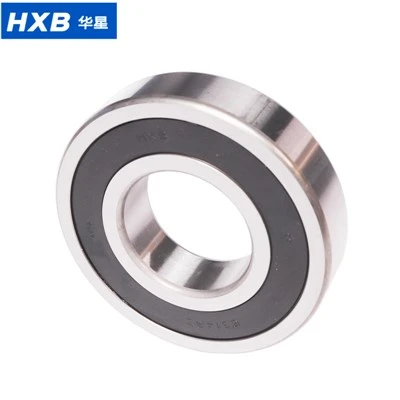
First off, let’s get one thing straight: “high-speed” here isn’t just a buzzword. If you’re targeting sustained operation above 10,000 RPM, or peripheral speeds over 30 m/s, that’s when you’re in the territory where standard 6200-series bearings start to fail. Peripheral speed matters way more than just RPM, by the way. A small 20mm bore motor spinning 15k RPM has way different bearing stress than a 100mm bore motor hitting the same RPM—its race surface is moving 5x faster, so the forces on the rolling elements are totally out of whack. I see engineers skip this all the time: they grab a bearing catalog, pick the first one that fits the bore, and then wonder why it’s vibrating like a jackhammer after a week. That’s not just bad—It’s avoidable.
Let’s start with the basics of bearing type, because that’s where most of my new customers mess up. For high-speed motors, deep groove ball bearings (DGBBs) are fine for low-torque, low-speed setups, but they fall hard when you’re cranking up the speed. Why? Their contact angle is zero, so the balls slide against the races more, generating way more friction and heat. If you’re going over 15k RPM, you need to switch to angular contact ball bearings (ACBBs) or cylindrical roller bearings? Wait no—cylindrical rollers are for heavy radial loads, but their end flanges create drag at high speed. Stick to ACBBs only if you have axial load, but even then, get the ones with a 15° contact angle, not the 25° ones for heavy industrial applications. 15° is a sweet spot: it gives just enough axial stiffness without upping the friction too much. And for super high-speed stuff—like 50k RPM for small brushless motors—you need hybrid ceramic bearings. Full steel balls expand with heat, so at high speeds, they get tight in the race, leading to skidding and premature wear. Ceramic balls (silicon nitride, not the cheap alumina ones) are 40% lighter, so they have way less centrifugal force, don’t expand as much, and can run 20-30°C cooler than all steel. I know a guy at an EV startup that switched from all steel to hybrid ceramic bearings and doubled his motor’s lifespan without any other changes—now he’s a repeat customer buying 500 bearings a month.
Next, internal clearance—this is make or break. Too tight, and when the motor heats up from high speed, the bearing expands so it seizes up. Too loose, and you get excessive axial play, which leads to vibration and noise that will make your customers return the motor within 3 months. For high-speed applications, I always tell folks to go for “C3” clearance, but wait—don’t just grab C3 off the shelf. Adjust for your motor’s operating temperature. If your motor runs at 80°C (common for industrial gear), you need to add a bit extra clearance, like C3 plus 0.02 mm, because the inner race (on the shaft) heats up faster than the outer race (on the housing). Most bearing suppliers don’t advertise this, but we do—we offer custom clearance tolerances for exactly this reason. I’ve seen a plant manager test a C3 bearing in a high-speed pump, and it seized in 48 hours because his housing was made of aluminum, which expands more than steel. We swapped it for a custom C3.5 clearance, and it’s run 2 years straight no issues. That’s the kind of detail that separates a good bearing supplier from a vendor that just boxes up off-the-shelf parts.
Then there’s lubrication—this is probably the biggest area where engineers get it wrong, even if they pick the right bearing. Grease lubrication is common for low-speed, low-maintenance motors, but at high speed, grease starts to churn like a milkshake in a blender. The churning generates so much heat that the grease breaks down in 6 months, leading to dry bearing failure. If you’re going over 20k RPM, switch to oil lubrication—either oil mist or oil jet. Oil mist is cheaper, good for small motors: it blows a fine mist of oil into the bearing, no reservoir needed, and it cools as much as it lubricates. Oil jet is for super high-torque, super high-speed setups (like industrial compressors): you spray a steady stream of oil directly onto the rolling elements, which carries away 80% of the heat. I work with a compressor OEM that used grease before, and their motors failed every 12 months. Switched to oil jet lubrication with our custom bearings, and now they run 5+ years without any lubrication top-ups. Pro tip: if you use grease, don’t overpack the bearing cavity. Too much grease = more churning = more heat. Fill it to 30-40% of the cavity, not 90% like the old guidebooks say. That’s a mistake every single new engineer I train makes.
Now, material selection—beyond hybrid ceramics. The races are usually chrome steel (AISI 52100), which is fine, but if you’re dealing with very high speeds and contamination (like in food and beverage or dust-heavy industrial plants), go for case-hardened steel, like AISI 4140. It’s harder on the surface, so it resists pitting from dirt or particles way better. The cage is another part people ignore. A steel cage will hold up, but at high speed, it creates drag and can rub against the balls. Use a polymer cage—glass-filled nylon or PEEK. PEEK is better for high temps, can handle up to 250°C, which is perfect for motors that run hot. We switched from steel to PEEK cages a few years back, and our customers reported a 15% reduction in operating noise and a 10% speed increase before wear. Worth the extra 10% cost, trust me.
Wait, let’s talk about vibration—because at high speed, even a tiny imperfection in the bearing can cause huge issues. Most bearing catalogs list “radial runout,” but for high-speed, you need “precision grade” bearings, not the standard “normal” grade. Go for ABEC 7 or higher, not ABEC 1. ABEC 7 has a much tighter tolerance for ball size and race roundness, so the bearing doesn’t vibrate at high RPM. I know a robotics company that used ABEC 1 bearings for their high-speed joint, and it would rattle so bad the camera mounted on it got blurry. Switched to ABEC 7 bearings from us, and the vibration dropped by 80%—they haven’t changed suppliers since. It’s not rocket science, but so many people skip this because standard bearings are cheaper upfront. The downtime from vibration is way more expensive than the cost of good bearings.
Now, common pitfalls to avoid. First, don’t mix bearing types on opposite ends of the motor. If one side is a hybrid ceramic angular contact, don’t put a standard steel deep groove on the other. The difference in expansion rates will cause uneven play, leading to vibration. Second, don’t forget about shaft and housing fit. The inner race should be a press fit on the shaft, but not too tight—if you press it on too hard, it deforms the race, ruining the clearance. The outer race should be a loose fit in the housing, so it can expand with heat. I see this all the time: engineers press the outer race in like it’s the inner one, and the bearing seizes in a week. Third, avoid high axial loads if you can—high speed + high axial = a recipe for bearing failure. If you need high axial, go for a pair of angular contact bearings, mounted back-to-back or face-to-face, to distribute the load.
Let me give you a real example. Last year, a customer came to us with a 40kW high-speed spindle motor for a CNC machine. They’d been using a competitor’s bearings, and they were failing every 2 months. Their motor ran at 25k RPM, so peripheral speed was around 45 m/s—way above the threshold for standard bearings. We worked with them to pick hybrid ceramic balls, 15° angular contact, custom C3.5 clearance, PEEK cages, and oil jet lubrication. We also adjusted the shaft and housing fits, so the inner race had a light press fit and the outer was a sliding fit. That motor has now run for 18 months straight, no failures, no noise. They just placed another order for 100 more bearings. That’s exactly the kind of solution we’re here for.
Here’s the thing: designing high-speed motor bearings isn’t about following a catalog. It’s about matching the bearing to your specific application, not the other way around. You can cut corners on cost upfront, but you’ll pay for it in downtime, repairs, and lost productivity down the line. If you’re in the middle of designing a high-speed motor and you’re not sure which bearings to pick, don’t guess—reach out to a supplier that actually understands high-speed applications, not just someone that sells generic bearings. We don’t just box up parts; we work with you to adjust clearance, lubrication, materials, and fit to your exact needs. No jargon, no hidden fees, just a bearing that works when you need it to.
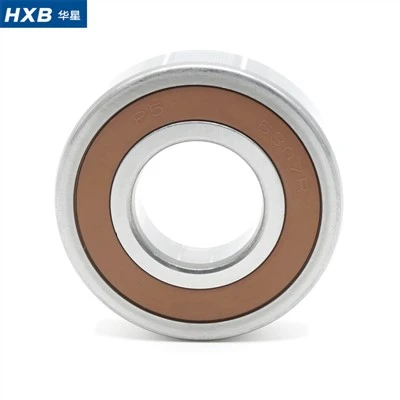
So, if you’re tired of bearings that fail too fast, or you’re designing a new high-speed motor and need to get it right the first time, hit us up to chat. We can walk through your specs, answer any questions you have, and even send a sample to test in your prototype. Don’t let bad bearings kill your project before it even gets off the ground.
Precision Angular Contact Ball Bearings References:
- Harris, T. A., & Kotzalas, M. N. (2007). Advanced Concepts of Bearing Technology (5th ed.). CRC Press.
- Shigley, J. E., Mischke, C. R., & Brown, T. H. (2004). Standard Handbook of Machine Design (3rd ed.). McGraw-Hill.
- Rumbarger, J. H., & Flower, J. O. (2000). High-Speed Bearings for Electric Machinery. Proceedings of the IEEE International Electric Machines and Drives Conference.
Hangzhou Huaxing Kechuang Holding Group Co., Ltd.
Hangzhou Huaxing Kechuang Holding Group Co., Ltd. is one of the leading manufacturers and suppliers of electric motor bearings in China, featured by quality products and good service. Please rest assured to buy bulk durable electric motor bearings from our factory. Welcome to view our website for more information.
Address: No.553 Yingbin Road, Linping, Hangzhou, 311100, China
E-mail: wmb@huaxingbearing.com
WebSite: https://www.hxbbearing.com/
