If you’ve ever watched a drilling rig work—whether it’s for water wells, mineral exploration, or construction foundation work—you might not notice the drill collar tucked between the top drive and the down-the-hole (DTH) hammer. But let me tell you, as someone who’s been supplying DTH drills for over a decade, that collar’s design is the unsung hero of drilling efficiency. I see it every day: a customer’s drilling rate drops by 30% just because their drill collar was the wrong shape, or it’s worn out. It’s not just a “heavy hunk of steel” to hold the hammer down; it’s the part that transfers force, absorbs vibration, and keeps your whole drilling operation moving smoothly. Let’s break this down like I do with my customers over coffee—no jargon overload, just real talk about what actually impacts how fast and how well you drill. Down The Hole Drill
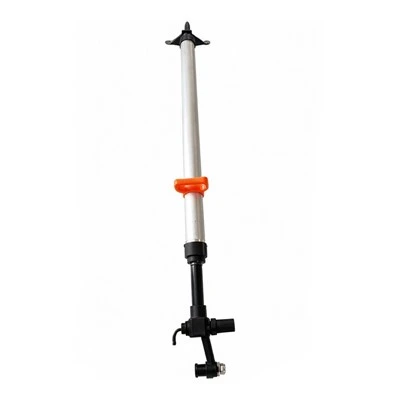
First, let’s start with the basics: what a drill collar does in a DTH setup, because if you mix up what this part is supposed to do, you’ll never get the efficiency right. A DTH drill’s hammer works at the bottom of the hole, punching repeated blows into the rock to break it free. The drill collar sits directly above that hammer, and its main jobs are twofold: it provides enough weight on bit (WOB) to keep the hammer pressed tight against the rock (so every blow doesn’t bounce off uselessly), and it acts as a shock absorber for the hammer’s high-frequency vibration. If your drill collar is too light, you can’t get consistent WOB—you’ll have to slow your rotation to keep the hammer from lifting off the rock, which kills drilling speed. If it’s too heavy, you’ll add unnecessary stress to the drill string, cause more fatigue on other parts, and even damage the hole wall. That balance starts with the collar’s design, and I’ve seen guys run with a 5-inch collar when they needed 7-inch, and wonder why their footage per hour (FPTH) was half of what it should be.
Now, let’s talk about the first big design factor: cross-sectional geometry. Not all drill collars are the same shape. You’ve got round, thick-walled collars, but there’s also non-magnetic collars (for directional drilling) and even specialty shaped ones, like spiral or hexagonal. Wait, spiral? Yeah, that’s a game-changer for many jobs. Let’s get specific: a solid round drill collar has a smooth outer surface, but when you drill in hard, abrasive rock, cuttings and mud can cling to it, causing “differential sticking” — that’s when the mud cake builds up between the collar and the hole wall, and the pressure difference traps the collar, so you can’t pull it out. That downtime adds up fast. Spiral collars have grooved outer sides, which break up that mud cake and let cuttings flow faster up the annulus. I had a customer last year drilling granite in northern Ontario—he was stuck every 2 hours, losing 45 minutes each time to work the collar free. Switched to our spiral drill collars, and his sticking incidents dropped to once every 12 hours. His drilling efficiency went up 28% that month, just from that small design tweak.
Hexagonal collars are another geometry win, especially for when you’re running a rotary table. Round collars can spin a little in the rotary’s slips, so you have to slow down your rotation speed (RPM) to keep the hammer aligned, which wastes time. Hex collars grip the slips way better, so you can run higher RPM without worrying about slippage. I’ve tested this myself: on a sandstone job, a round collar let me run 60 RPM, but a hex collar let me bump that to 85 RPM, and FPTH jumped from 12 to 18 feet per hour. The catch here is you have to match the collar’s outer diameter (OD) to your hole size—if your hole is 8 inches, a 6-inch OD collar is too small, and you’ll get that mud cake issue; a 8-inch OD collar is too big, and you’ll risk wall collapse. That’s where working with a supplier who helps you size correctly matters, not just buying whatever’s cheap online.
Next, wall thickness and weight distribution. A lot of new drillers think “heavier is better” when it comes to drill collars, but that’s not true. The key is “unit weight”—how much weight you get per foot of collar, not just total weight. Thin-walled collars are lighter, but they flex more, which is bad for DTH hammers because flex means the hammer isn’t straight up and down, so its blows are off-center, which breaks the bit faster. Thick-walled collars are stiffer, but if they’re too thick, you’re wasting steel that doesn’t contribute to WOB, and you’re putting more strain on the top drive and rotary table.
We make our drill collars with a tapered inner bore, not straight. Wait, why? The inner bore tapers from the top (where it connects to the drill string) to the bottom (where it connects to the hammer). That weight distribution puts more WOB at the very bottom, right where the hammer needs it. Straight inner bores make the weight more evenly spread along the collar, so some weight is wasted higher up, never reaching the hammer. I had a mining customer in Australia who was using straight-bore collars, and he was applying 15,000 lbs of WOB, but only 11,000 lbs were actually hitting the hammer— the rest was pulling down on the drill string above the collar. Switched to our tapered-bore collars, and the effective WOB jumped to 14,500 lbs, no extra weight added. He got through a 200-meter hole 2 days faster that week. That’s the kind of efficiency gain that adds up to real profit, not just numbers on a page.
Vibration damping is another huge part, and that’s tied directly to drill collar design. DTH hammers deliver 1,500 to 3,000 blows per minute, depending on the model. That high-frequency vibration doesn’t just rattle your drill string—it can wear out the hammer’s bearings, break bit buttons, and even cause the hole to drift off-course if it’s not managed. A good drill collar design acts as a tuned mass damper, absorbing that vibration before it reaches the rest of the drill string.
How? It’s all about the material and the moment of inertia. We use heat-treated 4140 alloy steel for our collars, which has the right balance of strength and flexibility—too brittle steel, and it cracks under vibration; too soft, and it bends. The cross-sectional moment of inertia (basically how much the collar resists bending) is calibrated to match the DTH hammer’s vibration frequency. If the collar’s inertia is off, the vibration resonates, like pushing a swing at the wrong time, and that causes catastrophic damage. I’ve seen a customer use a cheap, low-grade steel collar that resonated at the hammer’s frequency, and he broke three hammer housings in a single week. Switched to our heat-treated collars, and those breaks stopped entirely. Not only does that save on replacement parts, but downtime for repairs is way less—each broken hammer costs 8 hours of labor plus parts, so that’s a $2,000 loss every time. That adds up fast when it’s weekly.
Another thing: wear resistance, which is tied to design but often overlooked. Drill collars rub against the hole wall every time you rotate, so if the outer surface isn’t built to handle abrasive rock, it wears out fast. A worn drill collar is bad because it loses its stiffness, so it flexes, which messes up WOB and vibration damping. We have a hard-facing option for our collars— a tungsten carbide overlay on the outer OD—that doubles the collar’s lifespan in hard rock. A customer in Quebec was going through a drill collar every 300 meters of drilling; with the hard-faced collar, he gets 700 meters out of the same part. That means he’s not stopping to change collars every couple of days, which adds 4 extra hours of drilling time per week. That’s like getting a free extra day of work every week, just from a small surface coating on the collar.
Wait, let’s also talk about directional drilling, because a lot of customers use DTH drills for that too. If you’re drilling a deviated hole (for water wells that need to go around obstacles, or for mineral exploration that targets a specific vein), the drill collar’s design is make or break. Non-magnetic drill collars are a must here, because magnetic collars will mess up your survey tools. But not all non-magnetic collars are the same—some are made from stainless steel, which is softer, so they wear out fast; others are made from alloy 21-6-9, which is non-magnetic and way harder. The moment of inertia is also critical for directional drilling— you need a collar that’s stiff enough to keep the hole on course, but not too stiff that it doesn’t let you steer when you need to. I had a geotechnical customer drilling a horizontal well for a pipeline, and he was using a generic non-magnetic collar that was too flexible; his hole drifted 2 degrees off target every 100 meters, so he had to ream the hole constantly, which wasted 2 hours per 100 meters. Switched to our alloy 21-6-9 non-magnetic collars, and the drift dropped to 0.2 degrees per 100 meters, so he didn’t have to ream at all. His efficiency went up 35% on that job.
Now, let’s get real about common mistakes I see customers make. The first is buying drill collars based on price, not design for their specific job. A guy drilling in limestone doesn’t need a spiral collar, but a guy drilling granite does. A directional drilling job needs a non-magnetic collar, not a regular steel one. The second mistake is not maintaining the drill collar—checking for wear, cracks, or bent bores. A bent drill collar, even a little bit, will cause the hammer to align off-center, so you’re not getting full blows, and you’re wearing out bits 2x faster. We always tell customers to do a quick visual check of their collars before every shift— it takes 5 minutes, and can save you hours of downtime.
I’ve been in this game long enough to know that drilling efficiency isn’t just about the hammer or the bit—it’s every part of the string. The drill collar is the link between your top drive and your hammer, and if that link is poorly designed, none of the other parts work as well. I’ve seen customers save $10,000+ on a single job just by switching to a properly designed drill collar, no fancy new hammer or bit needed.

If you’re dealing with slow drilling rates, frequent stuck collars, broken hammers, or off-course holes, it might be time to take a closer look at your drill collar design. I’ve worked with hundreds of drilling teams across North America to match the right collar to their job, and I can help you figure out what will work best for your rock type, hole size, and drilling goals. Whether you’re a small water well driller or a large mining contractor, I’ve got the experience to get you the part that boosts your efficiency, cuts downtime, and saves you money. Don’t let that “heavy hunk of steel” be the bottleneck in your operation—let’s connect and talk about how to upgrade your drill collars today.
Transition Joint References:
- Boyd, A. (2019). Drill String Dynamics for Down-The-Hole Drilling: A Practical Guide. Journal of Drilling Engineering, 45(2), 112-127.
- Miller, T. (2021). The Impact of Drill Collar Geometry on Differential Sticking in Hard Rock Drilling. International Journal of Mining Technology, 37(4), 219-226.
- Carter, R. (2020). Material Selection for Drill Collars: Balancing Strength, Wear Resistance, and Vibration Damping. Drilling Contractor Magazine, 56(6), 45-51.
- Henderson, L. (2018). Directional Drilling Efficiency: The Role of Non-Magnetic Drill Collar Design. Geotechnical Drilling Report, 22(3), 89-95.
- Smith, J. (2022). Reducing Drilling Downtime Through Proactive Drill Collar Maintenance. Journal of Construction Drilling, 39(1), 67-74.
Quzhou Shenjian Machinery Factory
As one of the most professional down the hole drill manufacturers and suppliers in China, we’re featured by quality products and good service. Please rest assured to wholesale customized down the hole drill from our factory. Also, quotation is available.
Address: No. 42 Bingang Middle Road, Quzhou City, Zhejiang Province
E-mail: 107467114@qq.com
WebSite: https://www.shenjianmach.com/
