If you’re in the hydraulics space, you know Rexroth hydraulic piston motors are workhorses—they power everything from construction excavators and agricultural harvesters to material handling equipment and marine propulsion systems. As a Rexroth hydraulic piston motor supplier, I get asked questions about these motors all the time, and one that comes up regularly is: “What’s the point of a relief valve in a Rexroth hydraulic piston motor?” It’s a question that seems simple on the surface, but the answer goes far beyond just “preventing pressure buildup.” Let’s break this down from a perspective only someone who deals with Rexroth motors day in and day out can share—no overly technical jargon, just real-world insight from someone who specs, supplies, and troubleshoots these systems for hundreds of clients every year. REXROTH Hydraulic Piston Motor
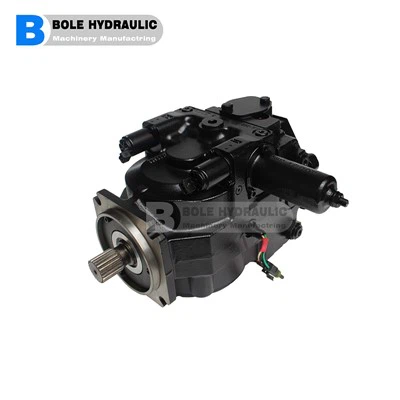
First, let’s set the stage to make sure we’re all on the same page. A Rexroth hydraulic piston motor converts hydraulic fluid pressure and flow into rotary motion, right? That motion is what drives loads, and the force behind that motion depends on the pressure of the fluid entering the motor’s chambers. But hydraulics work on a delicate balance: if pressure spikes for any reason, even by a little, it can cause serious damage to the motor, the attached equipment, and even the operator. That’s where the relief valve comes in. It’s not an optional add-on—it’s a critical safety component engineered into Rexroth piston motors (and often supplied as a matched part for replacements or upgrades) for four core purposes, each tied to keeping operations running smoothly.
The first and most obvious purpose: preventing catastrophic overpressure failures. Let’s take an excavator’s swing motor, for example. When an excavator operator swings the upper structure from left to right, everything is fine until that swing hits a hard stop—like if the operator misjudges the distance to a nearby wall, or the bucket gets caught on debris while swinging. At that exact moment, the motor can’t rotate any further, so the hydraulic fluid continues to pump into its chambers. If there’s no release for that excess pressure, the pressure can jump to 2, 3, even 10 times the motor’s rated maximum in milliseconds. Rexroth piston motors are built with high-strength components—cast iron housings, hardened pistons, precision-machined crankshafts—but they have a threshold. Exceed that, and you’re looking at a cracked motor housing, broken piston seals, a snapped crankshaft, or even hydraulic hose ruptures that can spray high-pressure fluid. I’ve seen this happen first-hand with a client’s 20-ton excavator last year: they skipped replacing the original relief valve during a motor rebuild, and when the bucket snagged on a rock during a dig, the pressure spiked, blew a seal, and cost them three days of downtime plus $1,200 in replacement parts. The relief valve is the first line of defense against that kind of loss.
Second, it controls maximum operating pressure to match equipment load requirements. It’s not just about stopping pressure spikes— the relief valve also sets a safe upper limit for the pressure the motor will see during normal operation. Rexroth designs their piston motors for specific applications, so each motor comes calibrated with a relief valve matched to its rated operating pressure. For example, a Rexroth A6VM series piston motor used in agricultural sprayers is calibrated for around 250 bar, while a larger A8VM series motor for mining equipment might be set to 420 bar. Why does this matter? If you run a motor at pressure higher than its rating, you’re wearing out components faster—piston seals harden, bearing surfaces wear prematurely, and the motor’s efficiency drops over time. Conversely, if the relief valve is set too low, the motor won’t produce enough torque to move the required load. As a supplier, I always remind clients that when replacing a relief valve, you can’t just grab any valve off the shelf—you have to match it to the motor’s model and application. That’s why we stock relief valves specifically calibrated for every Rexroth piston motor series we supply, from the smallest A2FM fixed-displacement motors to the variable-displacement A4VM models used in industrial machinery.
Third, it protects the entire hydraulic system, not just the piston motor itself. A lot of people I talk to think the relief valve only protects the motor, but that’s not true. The hydraulic system is a closed loop: the pump sends fluid to the motor, the motor sends fluid back to the reservoir, and every component in between (hoses, valves, pumps, filters) is built to handle a specific pressure. If the motor’s relief valve fails to open during a spike, that pressure travels back through the lines to the pump, which can cause pump damage, or blow a hose at a weaker point in the system. I had a construction client reach out to me last quarter with a problem on their skid steer: their motor’s relief valve was stuck closed during a lifting operation, and the excess pressure blew a hydraulic hose in the cab area. Not only did they have to replace the motor’s relief valve, but they also had to re-route the hose, replace the hydraulic fluid that spilled, and take the skid steer out of commission for two days. That entire issue could have been avoided with a properly functioning relief valve. It’s a shared safety component that keeps the whole system intact, not just one part.
Fourth, it regulates torque output to prevent equipment damage and operator error. Torque in a hydraulic piston motor is directly tied to pressure—higher pressure equals higher torque. The relief valve acts as a brake on that torque, so even if an operator tries to push the motor beyond its intended load, the pressure doesn’t spike to a level that can break equipment or cause injury. Let’s take a material handling forklift, for example. A forklift with a Rexroth hydraulic piston motor is used to lift pallets of heavy goods. If an operator tries to lift a pallet that’s 20% over the rated capacity, the motor’s relief valve will open, preventing the pressure from spiking high enough to snap the lift chain or damage the motor. It also protects the operator: hydraulic pressure spikes can cause sudden jerks in the equipment, which might throw an operator off or cause the load to shift. As someone who works with these motors every day, I can tell you that operator training is important, but the relief valve is a failsafe for when things go wrong. It’s a small, quiet component that does a lot to keep both equipment and people safe.
Now, let’s talk about a common misconception I hear all the time: “Can’t I just install a higher-rated relief valve if I need more power?” That’s a question I get all the time, and the answer is a firm no. Rexroth piston motors are designed with a specific pressure tolerance built into their components. If you install a relief valve rated for higher pressure than the motor is built for, you’re bypassing the motor’s own safety margin. Let’s use a real example: a Rexroth A2FM 32 piston motor, rated for 315 bar. If you install a relief valve rated for 400 bar, you’re pushing the motor beyond its designed limits. Even if the motor doesn’t fail immediately, you’ll see premature wear on the pistons, seals, and bearings. I’ve had clients try this in the past to get more power out of a small motor, and within six months, they were back needing a full motor replacement. It’s not worth the trade-off for a little extra short-term power. As a Rexroth piston motor supplier, I always stick to Rexroth’s specifications for relief valve ratings because that’s what the motors are engineered to handle.
Another point I want to cover: relief valve types for Rexroth piston motors. Rexroth offers a few different relief valve options, depending on the motor series and application. The most common is the direct-acting relief valve, which is simple, reliable, and good for low-to-medium pressure applications like small agricultural equipment. Then there’s the pilot-operated relief valve, which is used for higher pressure systems like mining or large construction equipment. Pilot-operated valves can handle larger pressure spikes without as much wear, making them a better fit for heavy-duty applications. We stock both types in our inventory, and I always help clients pick the right one based on their specific use case. For example, a client running a 50-ton crawler crane with an A6VM motor will need a pilot-operated relief valve, while a client with a small garden tractor using an A2FM motor will do fine with a direct-acting valve.
Now, what happens if the relief valve fails? I mentioned earlier that I’ve seen the results of a failed relief valve, but let’s talk about what to look for so you can catch it before it causes damage. The most common signs of a bad relief valve are: unexpected pressure spikes during operation, the motor making unusual knocking or grinding noises, reduced torque or power output, or hydraulic fluid leaks around the valve housing. If you notice any of these, it’s important to replace the relief valve right away—don’t wait for a full motor failure. As a supplier, I always advise clients to keep a spare relief valve on hand if their equipment is operating in a remote location, because waiting for a replacement can mean days of downtime.
As someone who’s been working with Rexroth hydraulic piston motors for over a decade, I can say that the relief valve is one of the most underappreciated components in the entire system. It’s not the motor itself, not the pump, not the hoses—but without it, all of those other components are at risk. It’s designed to be invisible when it’s working correctly, which is exactly how it should be. You don’t notice it until it fails, and that’s when the problems start.

If you’re working with Rexroth hydraulic piston motors and you’re not sure if your relief valve is the right one for your application, or you need replacement parts, don’t guess. Let’s connect to discuss your specific needs. Whether you’re troubleshooting a system that’s causing downtime, upgrading a motor for a new application, or just restocking spare parts for your fleet, we have the experience to help you get the right Rexroth relief valve and piston motor components to keep your operations running smoothly.
Charge Pump References:
- Rexroth Hydraulics, “Piston Motor Component Design and Application Guidelines,” Bosch Rexroth AG, 2022.
- Hydraulic Failure Analysis Handbook, Industrial Hydraulics Association, 2021.
- Rexroth A Series Piston Motor Technical Specifications, Bosch Rexroth AG, 2023.
- Mobile Hydraulics Safety Standards, International Organization for Standardization (ISO) 18875, 2020.
Shijiazhuang Baile Electromechanical Equipment Co., Ltd.
Shijiazhuang Baile Electromechanical Equipment Co., Ltd. is well-known as one of the leading rexroth hydraulic piston motor manufacturers and suppliers in China. If you’re going to buy high quality rexroth hydraulic piston motor at competitive price, welcome to get more information from our factory.
Address: Torch Industrial Zone, Licheng District, Quanzhou City, Fujian Province
E-mail: sales02@bailehydraulic.com
WebSite: https://www.bailehydraulic.com/
