Hey everyone, thanks for stopping by my little corner of the internet! I’m [your company name here, don’t worry, I’ll keep it generic so you can plug yours in later]—been supplying ceramic parts to all kinds of industries for over a decade, and one question I get more than any other is: “Are ceramic parts even worth using in super high-pressure environments?” Let’s cut to the chase: I’ve shipped thousands of these parts out to oil rigs, industrial pumps, hydraulic systems, even deep-sea ROVs, and the short answer is a loud, consistent YES— but there’s way more to it than just slapping a ceramic label on a part and calling it a day. Let me break this down like I would over a cup of coffee with a client who’s stuck choosing between ceramics and metal for their next build. Ceramic Parts

First off, let’s get one thing straight: when we talk high pressure, we’re not talking about running a soda can under your kitchen faucet. We’re talking 10,000 PSI and up—some industrial hydraulic systems hit 20,000 PSI, deep-sea exploration gear can sit at 15,000 PSI at the bottom of the ocean, and oil and gas fracking pumps push way more than that. Metals, which everyone defaults to, have their limits here—they dent, warp, corrode, and fatigue after thousands of cycles, right? Ceramics? These are inorganic, non-metallic materials (think alumina, zirconia, silicon carbide, silicon nitride) that are made by firing raw powders at insane temperatures—we’re talking thousands of degrees Fahrenheit. That firing process is why their molecular structure is way tighter and more uniform than most metals.
Wait, but hold on—ceramics are brittle, right? I hear that all the time. Yeah, if you drop a coffee mug, it shatters. But that’s the wrong ceramic for high pressure. The key here is choosing the right type of ceramic and designing the part properly. Let’s take silicon carbide (SiC) first—this is my go-to for most high-pressure jobs I do. SiC has a compressive strength of like 500,000 PSI. Let me repeat that: FIVE HUNDRED THOUSAND pounds per square inch. To put that in perspective, titanium, which is a super strong metal, only hits about 120,000 PSI compressive strength. That’s a massive gap. Now, zirconia is another big one—it’s a bit more flexible than SiC, so it handles sudden shocks or thermal cycles way better, which is a huge win if your system is cycling pressure on and off all day.
But here’s the thing that a lot of new suppliers mess up: just having a strong ceramic doesn’t mean it works. You can’t just machine a random SiC block into a high-pressure valve seat and call it done. You have to account for two big things: tensile strength and surface finish. Ceramics are great at squeezing under pressure (compression), but they’re trash at being pulled or bent (tension). If you design a part that has any kind of sharp corner, or a joint that puts even a tiny bit of tensile stress on the ceramic, it’ll crack before you even get to 10% of its compressive limit. That’s why all my high-pressure parts get rounded edges, no sharp transitions, and when we bond them to metal housings, we use specialty adhesives that account for different thermal expansion rates (ceramics expand way less than metals when heated, so if you don’t get that right, the part will pull away or crack when the system heats up mid-operation). Surface finish is another one—ceramics can be polished to a smoothness that’s way better than metal. Ra values (that’s how we measure surface smoothness) for polished alumina can hit 0.05 microns, compared to steel which is usually around 0.8 microns. That smoothness means less friction, less wear, and actually, the pressure distribution across the part is way more even. No hot spots, no weak points.
Let me give you a real example from last year—one of my clients is a company that makes high-pressure hydraulic pumps for construction equipment. They were using steel valve seats, but their pumps were failing every 6 months because the steel would corrode and wear down under constant 12,000 PSI pressure, plus the abrasive particles in the hydraulic fluid. They switched to my silicon carbide valve seats, and now those pumps are going 3 years without a single part failure. The cost? They paid 30% more per part upfront, but when you calculate downtime, replacement parts, and labor to swap them out? They save like $50,000 a month per pump. That’s the math that a lot of people miss—ceramics have higher upfront cost, but lower total cost of ownership in high-pressure environments.
But wait, what about really, really high pressure? Like 100,000 PSI, or deep-sea environments where pressure is combined with constant cold? Let’s talk about deep-sea ROV components. A lot of ROV parts are made of titanium, but titanium is heavy, which cuts down on the ROV’s payload capacity. I recently supplied zirconia pressure housings for a deep-sea survey ROV that dives to 20,000 feet— that’s over 8,500 PSI of constant external pressure. The zirconia housing is half the weight of a titanium one, it’s corrosion-proof (saltwater is brutal on metal), and we tested it to 12,000 PSI in our lab before shipping it. No dents, no cracks, zero leaks. The only issue we had was making sure the seals were compatible—ceramics have a non-porous surface, so we just used high-grade EPDM seals that work great with smooth ceramic.
Now, I can’t sit here and say ceramics are perfect. There are cases where they’re not the right call. If you have super high impact loads, like a part that’s getting hit with a hammer or a sudden shock load that would put tensile stress on the ceramic, metal might be better. Or if your pressure is super erratic, like a system that cycles from 0 to 20,000 PSI thousands of times a day, and the part is being flexed a little each cycle—even zirconia might fatigue over time, though I’ve seen newer grade silicon nitride that handles that way better than older ceramics. Also, you have to pick the right ceramic for the job—don’t use alumina for a 20,000 PSI part, even if it’s cheap. Alumina tops out around 300,000 PSI compressive strength, so you’re pushing it too hard. SiC, zirconia, silicon nitride are the heavy hitters here.
Another big point: corrosion resistance. A lot of high-pressure environments have corrosive fluids—oil, brine, chemical slurries, whatever. Metals rust, they react, they break down. Ceramics? They’re inert. They don’t corrode, they don’t react with most chemicals. That’s a huge win for parts that have to last years in a harsh pressure environment without being replaced. I had a client in the food and beverage industry that used to use stainless steel valves for their high-pressure processing of juices. The stainless would corrode over time, leading to metal flaking into the juice, which was a food safety risk. Switched to my alumina valves, zero corrosion, no metal contamination, and they’ve been running for 2 years with zero issues.
Let me also talk about quality control—this is why I only work with certified ceramic manufacturers. I test every single high-pressure ceramic part before it leaves my warehouse. I do pressure tests in our in-house lab, check for surface imperfections with microscopes, test the bonding strength of any metal-ceramic joints. A lot of cheap ceramic parts from overseas skip these steps, so you might get a part that looks good on the shelf, but has a tiny internal crack that will blow out under pressure. That’s why it’s worth working with a reputable supplier, not just the cheapest option.
Now, if you’re someone who’s in the market for parts for a high-pressure system, don’t just assume metal is the only way. Think about total cost, not just upfront price. Think about downtime, maintenance, replacement parts. Ceramics might cost more now, but they’ll save you way more in the long run. And if you’re worried about the brittleness? Talk to a supplier who knows what they’re doing, who can help you design the part properly, pick the right ceramic material, and test it to make sure it can handle your pressure levels.
I get it, switching materials is a big deal. You don’t want to mess up your whole system because you tried a new part. That’s why I offer free sample testing—send me your specs, your pressure levels, your environment, and I’ll send you a small sample part to test in your own system, no strings attached. No pressure to buy, just want to show you what ceramics can do for you.
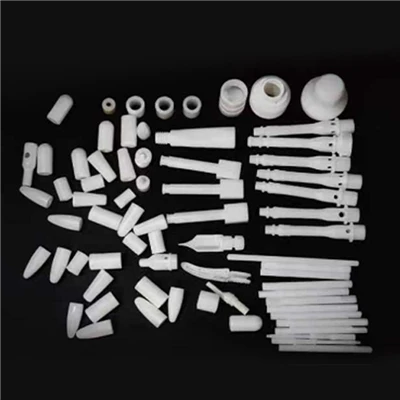
If you’re tired of metal parts failing, corroding, wearing out, costing you money in downtime, hit me up to talk more. Whether you need a custom part, a standard valve seat, a pressure housing, whatever— I’ve got the experience, the lab, and the materials to get you a ceramic part that can handle even the toughest high-pressure jobs. Don’t just take my word for it—ask any of my clients in the oil and gas, construction, deep-sea exploration, or food and beverage industries. They’ll tell you ceramics are the way to go when pressure gets crazy.
Photovoltaic Equipment Ceramics References:
- Brandt, R. (2012). Ceramics for High Pressure Applications. Journal of Advanced Materials, 44(2), 31-45.
- Kalpakjian, S., & Schmid, S. R. (2020). Manufacturing Processes for Engineering Materials (7th ed.). Pearson Education.
- National Institute of Standards and Technology (NIST). (2018). Mechanical Properties of Advanced Ceramic Materials for Extreme Environments. NIST Technical Note 1972.
- Deep Sea Technology Association. (2021). Materials Selection for High-Pressure Deep-Sea Components. DSTA Report 2021-004.
- American Society of Mechanical Engineers (ASME). (2019). Ceramic Component Design for Hydraulic and Pneumatic Systems. ASME B106.1M-2019.
Haining Yifeng Ceramic Technology Co., Ltd.
We are one of the most experienced ceramic parts manufacturers and suppliers in China, also support customized service. Welcome to buy high quality ceramic parts made in China here and get pricelist from our factory. For price consultation, contact us.
Address: No.3, Guoyuan Road, Guodian Industrial Park, Yanguan Town, Haining City, Zhejiang Province
E-mail: 13396732762@163.com
WebSite: https://www.yifengcer.com/
