If you’ve ever walked into a Tiny Apple Cabin, you know it’s not just a tiny, mobile structure—it’s a space built for connection, comfort, and cutting through the chaos of big-box resorts and crowded theme parks. When I first started as a supplier for these cabins three years ago, I got more questions about rules than I did about delivery timelines or custom build specs. The one that stuck out more than any other? “Can I bring my own food to Tiny Apple Cabin?” Tiny Apple Cabin

It’s a fair question. These cabins are designed as flexible, all-in-one (but not always all-inclusive) retreats: some setups come with a mini-fridge and a countertop, others have a small outdoor patio with a fire pit. There’s no in-house restaurant at every location, and for many groups—whether it’s a family of four on a weekend getaway, a couple celebrating an anniversary, or a small team doing a remote work retreat—bringing your own snacks, meals, and drinks makes the most sense. But after three years of working with site operators, cabin owners, and the folks who rent these spaces, I’ve got a really detailed, practical breakdown of that question—no fluff, no fine print, just real-world facts I’ve picked up along the way.
First, let’s start with the core reason most people ask this: Tiny Apple Cabins are built for personalization, and food is one of the most personal parts of any trip. You might have a kid with a peanut allergy that means pre-packaged snacks are the only safe option, or you might be on a tight budget and don’t want to add restaurant bills to your rental cost, or you might just love making your grandma’s chili on a portable stove instead of ordering takeout. That’s why bringing your own food is almost always allowed—but it’s not a free-for-all, and the rules aren’t random. They tie directly to how each Tiny Apple Cabin is set up, the local health codes where it’s parked, and what site operators need to keep everyone safe and happy.
Let’s break it down by cabin type, because that’s the biggest factor. When I supply cabins to different operators, I categorize them into three main use cases, and each has different food policies:
-
Base Cabins: These are the most common, designed for casual, short getaways (1-3 nights) at campgrounds or rural glamping sites. They have basic amenities: a mini-fridge, a microwave, and a countertop, but no full kitchen or cooking appliances. Here, bringing your own food is totally allowed—most operators actively encourage it, because adding meal prep is part of the glamping charm. I’ve seen families stock up on road trip snacks, cold cuts for sandwiches, and even frozen pizza to heat up in the microwave. The only small caveat here is that you can’t bring bulk dry goods (like 5-pound bags of rice) that would take up too much mini-fridge or pantry space, since these cabins are tight on storage.
-
Premium Cabins: These are the mid-tier options, usually parked at larger glamping resorts or private property sites. They come with a small outdoor kitchen (a two-burner portable stove, a sink, and a dedicated counter for prep) and a little more storage for food. For these, bringing your own food is standard, and many operators even provide free basic cleaning supplies to make meal prep easy. The only rule here is that you can’t use open-flame grills inside the cabin, even if the space has a vent hood—we’ve had a couple of small fires early on when someone tried to use a charcoal grill indoors, so that’s a strict no-go for both safety and insurance reasons.
-
Luxury Cabins: The top-tier option, often called “Glamping Plus” or “Backcountry Retreats,” these have full kitchens, outdoor fire pits, and sometimes even a small bar area. Here, bringing your own food is not just allowed—it’s expected, in most cases. Many luxury cabin owners want guests to enjoy the full experience of cooking outdoors, so they provide things like cutting boards, cookware, and even a starter kit of spices. The only restriction here is related to local health codes: if the cabin is near a protected water source (like a lake used for drinking water), you can’t bring food that has raw meat that could leak bacteria into the ground. That’s a local law, not a cabin-specific rule, and it applies to almost all glamping spots near freshwater in the U.S. and Canada, where most of our cabins are deployed.
Now, what about the exceptions? Because there are always a few cases where bringing your own food gets tricky. First, if you’re renting a Tiny Apple Cabin that’s located on a property that has an on-site restaurant or a food stand, some operators will ask that you only bring snacks (not full meals) after a certain time. This is usually to support local small businesses—many of the sites we supply cabins to are rural, and the food stand is run by a local family that relies on cabin guests for income. It’s not a hard rule, but it’s a common courtesy that most guests follow, and it’s easy to work around: just save your big meal for lunch, or pick up a few items from the food stand for dinner.
The second big exception is for events. If you’re renting multiple Tiny Apple Cabins for a wedding, a corporate retreat, or a large group gathering, the host (whether that’s you or the event planner) will need to coordinate food rules with the site operator. For events over 10 people, many local health codes require that food is either pre-packaged, prepared by a licensed caterer, or checked by the site’s health inspector. That doesn’t mean you can’t bring your own food for the group—it just means you’ll need to label all items, keep hot food at 140 degrees or above, and cold food at 40 degrees or below. I’ve worked with several wedding planners who bring home-cooked dishes for rehearsal dinners, and as long as they follow those basic storage rules, it’s totally fine.
Wait, but what about allergies? That’s a big one, and it’s something I’ve seen come up more and more in the last year. The good news is that almost all Tiny Apple Cabins are flexible about allergy-friendly food. If you’re traveling with someone who has a nut allergy, a gluten intolerance, or any other food restriction, you’re more than welcome to bring your own specialized food. The only thing to note is that if you’re staying in a base or premium cabin with shared common areas (like a campground kitchen, or a patio that’s used by multiple cabins), you should let the site operator know so they can make sure other guests with allergies are aware—like keeping your specialty food in a sealed storage bin that’s clearly labeled.
Another common question: can I bring alcohol? That’s tied to food rules, and the answer is almost always yes, but with caveats. For base cabins at public campgrounds, alcohol is usually allowed as long as it’s in cans or sealed bottles (no glass, to protect the property) and kept to your own small group. For premium and luxury cabins, you can bring wine, beer, spirits, whatever you want—just make sure you dispose of any empty containers properly, since site operators have to clean up after every guest. The only time you can’t bring alcohol is if the property is dry, which is rare but does happen in some rural areas where the cabin is near a church or a local ordinance that prohibits alcohol sales. That’s usually listed on the cabin’s rental page, so it’s easy to check before you book.
Now, let’s talk about why these rules exist, because a lot of guests think they’re just random hoops. When I first started supplying Tiny Apple Cabins, I had a site operator tell me a story about a group that brought a whole bunch of raw chicken and left it in the outdoor sink during a 90-degree day, and it spoiled, attracting raccoons that got into three other cabins’ food. That’s not just a hassle—it’s a safety issue, and it’s why health codes and site rules are in place. The small restrictions aren’t meant to be annoying; they’re meant to make sure everyone has a good time, and no one’s property gets damaged or anyone gets sick.
I’ve also seen how bringing your own food can make a Tiny Apple Cabin trip way better. Last year, I helped supply a group of friends who rented three premium cabins for a fall weekend. They brought their own ingredients for chili, s’mores, and apple cider, and they spent the whole weekend cooking together on the outdoor stoves, instead of eating at restaurants. They ended up posting photos of their spread on Instagram, and more than a dozen people reached out asking where they could rent the same type of cabins. That’s the charm of Tiny Apple Cabins—they’re not a one-size-fits-all vacation; they’re a space for you to make your own experience, and food is a huge part of that.
If you’re planning a trip and still not sure about the food rules for a specific cabin, here’s what I recommend doing before you book: first, check the rental details on the site where you’re booking. Most Tiny Apple Cabin listings will have a section about food and alcohol policies. If it’s not listed, reach out directly to the site operator, not the booking platform—operators know the most about their specific rules. And if you’re bringing specialized food for allergies, a large group, or a special event, just mention that when you ask—most operators are happy to adjust rules to fit your needs, as long as you communicate early.
For those of you who might be thinking about becoming a Tiny Apple Cabin owner or operator, let me add a note: when designing these cabins, we build flexibility into every space. We size mini-fridges to fit standard grocery store produce bins, we install outdoor sinks that work for both hand washing and food prep, and we include storage for food so guests don’t have to leave items in their cars. We work closely with health code experts to make sure our cabins meet all local requirements, and we train site operators to communicate food policies clearly, so there’s no confusion.
At the end of the day, the answer to “Can I bring my own food to Tiny Apple Cabin?” is almost always yes. The small caveats are there to keep everyone safe, respectful, and able to enjoy their trip. You don’t have to stick to pre-planned meal packages or expensive on-site dining—you can bring your grandma’s recipe, your kid’s favorite gluten-free snacks, or a case of craft beer that you’ve been saving for a special weekend. That’s what makes Tiny Apple Cabins different from other small stays: they’re built for you, not the other way around.
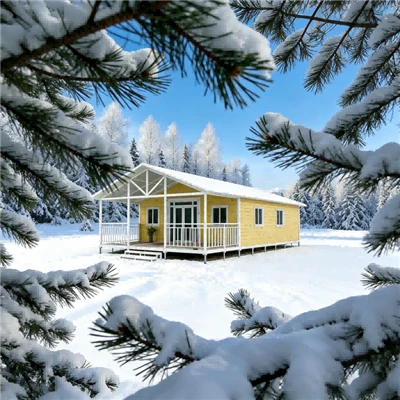
If you’re a site operator or cabin owner looking to integrate Tiny Apple Cabins into your property, or if you’re interested in learning more about our build and supply options, we encourage you to reach out for procurement and partnership discussion. Our team works with properties of all sizes, from small family campgrounds to large resort chains, to customize cabins that fit their specific needs.
Apple Cabin References:
- National Association of Glamping Operators. (2022). Best Practices for Glamping Site Safety & Guest Amenities.
- U.S. Department of Agriculture. (2021). Food Safety Guidelines for Outdoor Recreation and Glamping.
- Canadian Camping and RV Association. (2023). Local Health Code Requirements for Food Service in Recreational Accommodations.
Shandong Qidi Anzhu International Trade Co., Ltd.
As one of the most professional tiny apple cabin manufacturers and suppliers in China, our products have good reputation in the market. Please rest assured to wholesale high quality tiny apple cabin for sale here from our factory. We also accept customized orders.
Address: Room 704, Zhexin Plaza, Dongfeng Street No.7666, Kuiwen District, Weifang City, Shandong Province
E-mail: wendy@eco-modulehouse.com
WebSite: https://www.eco-modulehouse.com/
