Hey everyone, it’s Jake from the substation steel structure squad. For the last six years, I’ve stood right on construction sites next to clients staring at rust spots on brand-new steel beams, shaking their heads like they just saw a leaky pipe right after it was installed. Let me tell you, electrical corrosion on substation steel isn’t just an eyesore—it’s a silent killer that can mess with the whole grid, drive up maintenance costs big time, and even shorten the lifespan of your substation before it’s had a fair shot. Today, I’m breaking down exactly how we fix this on my end (since I supply the steel structures, I see way too many mistakes happen during installation that lead to corrosion) and what everyone on the project can do to keep those steel bits holding strong for decades. Substation Steel Structure

First off, let’s get real about why substation steel corrodes faster than, say, a garden chair left out in a rainy state. This isn’t your basic metal rust—substations are soup for corrosion because of all the factors crammed in there. You’ve got high-voltage equipment that leaks tiny amounts of corrosive gases (sulfur hexafluoride is a big one, for anyone who’s worked with breakers), industrial areas where the air’s full of salt or chemicals, moisture that hangs around from construction, and even galvanic corrosion if you mix different metals without thinking it through. I’ve seen clients cut corners by buying cheap fasteners that aren’t compatible with the main steel, and within two years, those fasteners are rusted solid, making it impossible to tighten bolts for inspections. So let’s start with the foundation: choosing the right steel and coatings before it even leaves our warehouse.
When I supply steel structures, I don’t just hand over bare metal and call it a day—we spec everything based on the substation’s location, and that’s non-negotiable. For example, if it’s near the coast, salt spray is the enemy number one, so we use hot-dip galvanizing that’s thicker than the standard. Wait, what’s hot-dip galvanizing, you ask? It’s when we dip the steel into molten zinc, so the zinc bonds literally to the steel, not just sits on top. That’s way more durable than paint, which chips off if someone drops a tool or a guy steps on it during installation. For inland substations in humid areas, we might add a extra primer coat that’s epoxy-based—something that sticks better to galvanized steel than regular paint. I always tell our clients: don’t go for the cheapest coating. I’ve had a job where a guy opted for a thin paint coat to save a couple bucks, and by year three, it was peeling so bad you could see rust under every spot. We’ve got data that shows our properly coated structures last 30+ years, while cheap alternatives fall apart in 10.
Next up, it’s all about how we fabricate the steel before it ships, because small cuts during welding or drilling can become corrosion hotspots. Here’s a mistake I see all the time: guys just weld two pieces of steel together and leave the weld bare. Welds are super vulnerable because the heat changes the metal’s structure, so the coating doesn’t stick right there. When I fabricate structures, we grind every weld smooth immediately after it cools, then apply the same zinc-based coating to the weld as the rest of the steel. No exceptions. We also pre-drill all holes in the shop, not on-site. Drilling on-site means metal shavings get left in the holes, along with dirt and moisture, and those little bits trap corrosion right next to the steel. Pre-drilling in a controlled warehouse means we can clean the holes, coat them, and make sure no gunk gets left behind. I had a client on the Gulf Coast a while back who tried drilling on-site to save time, and within 18 months, water was sitting in those drilled holes, turning the steel around them rusty. It’s a 10-minute fix in the shop that saves you thousands later.
Now, the installation part—this is where I can’t be there every day, so I need to talk to the contractors about the stuff they do that messes everything up. The biggest one is damaging the coating during lifting or moving steel. I’ve seen guys use steel slings to lift galvanized beams, and the sling scrapes the coating off like sandpaper, leaving a bare spot that’s just waiting to rust. What do we recommend instead? Use synthetic slings or protective padding on steel slings. And if you do chip a spot (even a tiny one), you can’t just leave it. Contractors always say “we’ll touch it up later” and then never do. We supply our clients with touch-up paint that matches the structure’s coating—special zinc-rich paint, same as what we use on the main parts—and tell them every crew member should have a small kit with it. If a chip is bigger than a quarter, grind the rust (or the chipped area) first, clean it with a degreaser, then apply two thin coats of the touch-up paint. No skimping here—one coat won’t stick right and will peel. I once had a client who skipped that step, and in a year, a 2-inch chip turned into a 2-foot rust patch because of rain and humidity trapped under the paint.
Another installation mistake is mixing different metals, which causes galvanic corrosion. Let’s keep this simple: if you put two dissimilar metals together in the presence of moisture, one acts like a battery and corrodes. For example, if you use aluminum fasteners on steel, the steel will corrode way faster because it’s the “anode” in that pair. When we supply steel structures, we always include fasteners that are the same material or compatible with the steel—usually galvanized steel, sometimes stainless steel if it’s a harsh environment. I’ve had a client bring their own fasteners that were cheap aluminum, and I had to tell them straight up they’d regret it. They argued with me, but three years later, they called me begging to replace half the fasteners because they were rusted. Don’t make that call. Ask your steel supplier to include compatible fasteners, it’s not that much more expensive and saves you a ton of headaches.
Then there’s the maintenance part—corrosion prevention doesn’t stop when the substation is built, it’s ongoing. I know substation teams are busy, so I’ll give you the 10-minute version of what to do, not some 50-point checklist. First, do annual visual inspections. Walk around the steel structures, look for chips, peeling paint, or any rust spots. If you see a spot smaller than a pencil eraser, touch it up right then—don’t wait until it’s bigger. Second, keep the area around the steel clean. Leaves, dirt, construction debris left around the bases trap moisture against the steel, so clear that stuff away every few months. Third, check for any water pooling on top of the steel beams or trusses. If there’s a dip where water sits, that’s a corrosion hotspot. Fixing that can be as simple as adjusting the beam slightly or applying a sealant to the dip. I’ve seen substations where leaves piled up on a horizontal beam, rotted, and held water for years—by the time someone noticed, the beam was rusted through.
Wait, let’s talk about a newer issue I’ve been seeing with substations that have upgraded equipment—corrosion from nearby chemicals. Some utilities are switching to eco-friendly coolants or gases, and a few of those can be corrosive to steel if it’s not coated right. When I supply structures for these projects, I spec the epoxy-polyester hybrid coating instead of regular hot-dip galvanizing, because it’s resistant to those specific chemicals. If you’re upgrading your substation equipment, make sure your steel supplier is in the loop on any new materials or chemicals being used—don’t just go with the same coating you used 10 years ago. That’s a mistake I see way too often: utilities stick to old specs without updating for new tech, and then they’re surprised when corrosion pops up where it shouldn’t.
Let me also call out a myth I hear all the time: “It’s just a little rust, it’s not a big deal.” No, it is a big deal. Rust eats away at the steel, weakening the structure. For substation structures that hold high-voltage buses or equipment, a weak beam can cause sway, which can damage the equipment, leading to outages that cost utilities millions. I had a client in Texas a few years back who ignored a small rust spot on a gantry that holds buswork. Within two years, the gantry swayed enough to crack a bus insulator, causing a 3-day outage that cost them over $2 million in lost power and repairs. That $50 worth of touch-up paint would have saved them all that money. Don’t cut corners here.
Now, as someone who supplies these steel structures, I’m always pushing to make this easier for our clients. We’ve started offering pre-coated, pre-marked structures, so you know exactly where the high-tension areas are that need extra coating. We also provide free training for contractors on-site when the structures first arrive, showing them how to lift without damaging coating, how to drill holes properly, and how to do touch-ups. A lot of contractors don’t get that training, so they make mistakes out of ignorance, not laziness. We want to fix that, because when our structures last longer, we look good too, but more importantly, it’s better for the grid.
What about if you already have an older substation that’s starting to show corrosion spots? I get calls all the time about that too. First, do a full inspection to figure out how bad it is—some spots are just surface rust, which you can sand off and touch up, while deep rust that’s eaten through the steel needs to be patched or replaced. Don’t just cover it with paint, that will trap moisture and make it worse. For surface rust, use a wire brush or sandblaster to get all the rust off, clean the area, and apply the zinc-rich touch-up paint. For deep spots, you’ll need to cut out the rusted section, weld in a new piece of steel, grind it smooth, and recoat—same as we do in fabrication.
Here’s the thing I’ve learned over the years: electrical corrosion on substation steel isn’t inevitable. It’s preventable, but it takes work from everyone—the steel supplier, the contractors, the maintenance team, the utilities. Too many people write it off as a “cost of doing business,” but that’s a mistake. The small steps we take during fabrication, installation, and maintenance add up to structures that last 40, 50, even 60 years without major issues. That’s way better for budgets, way better for the grid, and way better for everyone who relies on electricity.
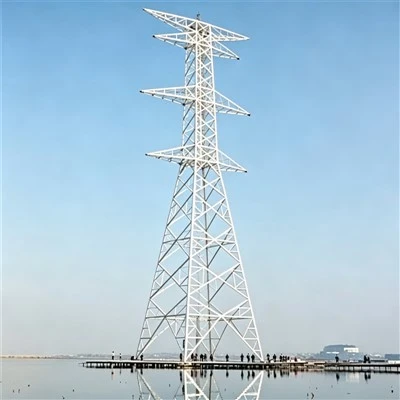
Now, if you’re working on a substation project right now, or you’ve got an older one that’s fighting corrosion, I’m here to help. We can spec the right steel and coatings for your location, train your crew on installation best practices, or even come do a corrosion assessment for an existing site. No sales pitch, just straight talk about what works, what doesn’t, and how to save you time and money in the long run. If you want to chat about your specific needs, reach out and let’s connect—we can work out a plan that fits your project.
Power Transmission Tower References:
- American Iron and Steel Institute. (2020). Galvanic Corrosion Prevention for Structural Steel. AISI Steel Construction Manual.
- IEEE. (2019). Corrosion Control in Substation Structures and Equipment. IEEE Standard 142-2019.
- National Association of Corrosion Engineers (NACE). (2021). Corrosion Prevention for Electrical Transmission and Distribution Structures. NACE International Publication 35100.
- International Organization for Standardization (ISO). (2018). Metallic and Inorganic Coatings – Hot-Dip Galvanized Coatings on Steel for Corrosion Protection. ISO 1461:2018.
Qingdao Hongyuanfeng Power Equipment Co., Ltd.
Hongyuanfeng is one of the most professional substation steel structure manufacturers and suppliers in China, also supports customized service. Please feel free to wholesale advanced substation steel structure in stock here from our factory. Good service and quality products are available.
Address: No.42 Fengwu Road, Beiguan Industrial Park, Jiaozhou City
E-mail: 13808970205@163.com
WebSite: https://www.hyfsteelpod.com/
