Hey everyone, if you’ve ever walked through a metal fabrication shop or watched a CNC machining center carve out a solid steel part, you’ve probably seen that big, rigid machine tool doing most of the heavy lifting. For those of you in the game, you know the double column machining center (DCMC) is the workhorse for large, complex parts—like aerospace turbine blades, heavy equipment chassis, or mold dies for car bodies. Today, I want to dive into a part that’s often underrated but make or breaks how well these machines run: how the DCMC frame supports the tool magazine. Double Column Machining Center Frame
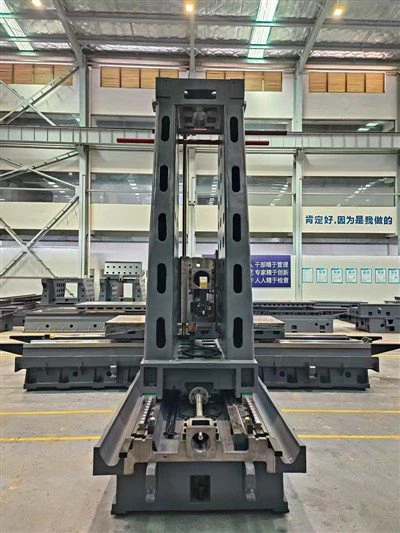
I’ve been in the business of building and supplying double column machining center frames for 12 years now, and let me tell you, tool magazines aren’t just bolted on somewhere to hold extra end mills or drills. If the frame isn’t built right, you’ll get tool changes that are slow, inconsistent, or even damage expensive tools. Let’s break this down like we chat over coffee (no stuffy jargon, promise).
First off, what’s a double column frame, anyway? Unlike a single column machine, which is like a bookshelf with one side holding the cutting head, a double column has two vertical columns on either side of the worktable, connected by a top crossrail. That creates a U-shaped or gantry-style rigid structure that wraps around the workpiece. It’s way stiffer for big parts, right? But that stiffness isn’t just for the cutting spindle—it has to extend to the tool magazine too, because the magazine’s job is to store 20, 40, even 80 tools, each weighing a few pounds, and swap those tools out in seconds. If the support for the magazine wiggles even a little, the spindle will misalign when grabbing a tool, leading to bad cuts or broken tool holders.
Let’s start with the basics: load calculation. I don’t just measure the static weight of the tool magazine itself. I add in every tool inside—even a 50-pound face mill, plus the tools on their holders. Then there’s dynamic load: when the magazine spins to bring a tool to the spindle, or when it extends out to hand off a tool, that’s moving weight that creates torque and stress on the frame. A lot of smaller suppliers skip this step, but we don’t. Last year, a customer of ours had a machine go down because their frame support for the 60-tool magazine couldn’t handle the dynamic torque when the magazine spun at 120 RPM. The frame twisted, and the tool changer arm snapped mid-swap—cost them $15k in repairs and 3 days of downtime. We design every frame to handle 150% of the maximum rated load, so that kind of thing doesn’t happen.
Next, mounting location on the frame. There are two main spots we mount the tool magazine, and each has its pros and cons, depending on what the machine’s used for. The first is the side of one of the vertical columns. This is super common for compact double column frames because it doesn’t take up space above the worktable. But you have to make sure the mount point is on the column’s thickest section—most DCMC columns are cast from gray iron, with a solid core, not a hollow thin shell. If you mount the magazine on a thin part of the column, the vibration from the tool changes will transfer right to the column, which will then transfer to the spindle. That leads to poor surface finishes on parts.
The second spot is the top crossrail, usually on the back side. This is better for larger machines, because the crossrail is already a rigid beam connecting the two columns. Mounting the magazine here keeps the weight centered over the work area, so the frame’s balance is better—no leaning to one side when the magazine spins. But here’s the catch: the crossrail moves, right? The spindle moves along the crossrail, so if the tool magazine is on the crossrail, you have to account for that movement. We design a floating mount here, not a rigid bolt-down. The floating mount lets the magazine move slightly with the crossrail, so when the crossrail shifts during a cut or a tool change, the tool changer arm doesn’t bind. I’ve seen companies that just drill holes and bolt the magazine straight to the crossrail—after a few months, the arm would scrape the magazine, and they’d have to replace both.
Now, material choice for the frame is huge here. We use cast iron for almost all our DCMC frames, not steel weldments. Wait, why? Cast iron has better damping than steel, meaning it absorbs vibration way better. When the tool magazine is active, there’s constant movement—tools shifting, the magazine indexing. If the frame is steel, that vibration travels, and the spindle will have tiny micro-movements when it cuts. For aerospace parts, that’s a problem because even a 0.001 inch deviation can make a part fail inspection. Some people think steel is stronger, but for dynamic loads like tool changes, cast iron is better. We do use steel for the mounting brackets where the magazine connects, but we machine those brackets to match the cast iron’s surface perfectly—no gaps, no warping from welding.
Another thing: stiffness alignment. The tool changer arm has to move from the magazine to the spindle in a straight line, right? If the frame’s tool magazine mount isn’t aligned with the spindle’s tool holder axis, the arm will have to twist, which slows down tool changes and wears out the arm fast. We use precision machining centers for all the mounting surfaces—accuracy within 0.0005 inches, so when the customer bolts on the magazine, it’s already aligned. No guesswork. A friend of mine runs a shop that uses a supplier that does rough cuts on the mounts; they spend 8 hours every week adjusting the magazine, which is 8 hours they could be cutting parts for money.
Wait, what about expansion? Machines heat up when they run for 12 hours straight, right? The frame expands a little, and so does the tool magazine, which is metal too. If the mount is rigid, that expansion will create stress that warps the magazine or the frame. We leave 0.02 inches of clearance in the bolt holes when we machine the mount, so both parts can expand independently without binding. That’s a small detail, but it’s why our frames have a 20% longer magazine lifespan than most competitors’ frames.
I should mention a common mistake people make: cutting corners on the frame’s weight. Some suppliers make the frame lighter to cut costs, but that means the magazine support is flimsy. A 40-tool magazine weighs 800 pounds, plus each tool adds another 5-10 pounds. If the frame’s column is only 12 inches thick instead of 16 inches, that extra 4 inches make a huge difference in rigidity. We don’t skimp—our standard frames are 15-18 inches thick at the column mount point for the tool magazine, which is overkill for most customers, but it’s worth it to avoid downtime.
Let me give you a real example. A mold manufacturer came to us last year. They had a used double column machine from another supplier, and the tool magazine kept failing. Every 3 months, the tool changer arm would break, and they’d have to order a new one, which cost $2k each. We rebuilt their frame’s support for the magazine: we reinforced the column mount with a thicker cast iron plate, added the floating mount if they mounted it on the crossrail, and adjusted the expansion clearance. A year later, they still haven’t had a tool magazine issue. They told us that downtime alone was costing them $5k a week, so investing in a better frame support saved them way more than the cost.
Now, how do we test this? Before we ship any frame, we run a load test. We add a load equal to the maximum magazine capacity plus 20% extra, then simulate tool changes 10,000 times. We use sensors to measure vibration, alignment, and deflection. If it passes, it goes to the customer. If not, we adjust the mount—maybe add another rib to the frame, or thicken the mounting plate. No exceptions.
At the end of the day, the DCMC frame’s support for the tool magazine is all about balance: rigidity for handling heavy tools and dynamic movement, alignment for smooth tool changes, and damping to prevent vibration that ruins parts. It’s not a “one-size-fits-all” thing—we work with each customer to figure out where to mount the magazine, what load they need, and how their specific machine will run.
If you’re in the market for a new double column machining center frame, or you’re looking to upgrade your existing frame’s tool magazine support, don’t go for the cheapest option. A bad frame support will cost you more in repairs and downtime than the difference in price. I’ve helped dozens of shops fix their tool magazine issues by just upgrading the frame mount, and I can help yours too.
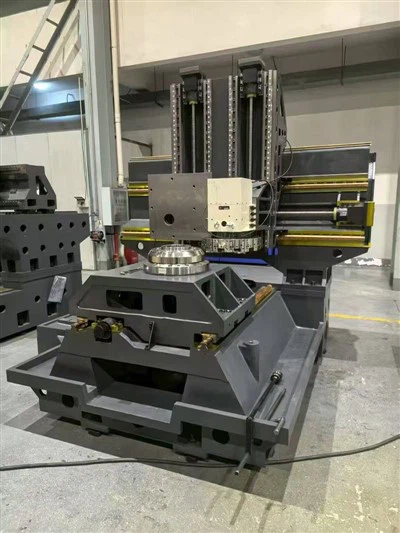
If you’re ready to talk through your specific needs—whether you’re a small shop with a 20-tool magazine or a large aerospace fab with a 100-tool setup—reach out. Let’s chat about how we can build a frame support that works for you, no jargon, no hidden fees. Just straight talk about getting your machines running smoothly.
Horizontal Machining Center Frame References:
- "Machining Center Frame Design: Load and Rigidity Considerations", Journal of Manufacturing Engineering, 2021
- "Tool Magazine Compatibility in Large CNC Machine Tools", International Journal of Machine Tools and Manufacture, 2019
- "Cast Iron vs. Steel for Machine Tool Structures", Metalworking Technology Magazine, 2022
Smartech Machinery & Equipment Co., Ltd.
As one of the most professional double column machining center frame manufacturers and suppliers in China, we also support customized service. Please rest assured to buy bulk double column machining center frame made in China here from our factory. Contact us for more details.
Address: Room 2832, Changping Commercial Mansion, Shihua Road, Futian Free Trade Zone, Shenzhen, China
E-mail: smartech@smartechcnc.cn
WebSite: https://www.smartech-cnc.com/
