Let me take a step back first, because anyone who’s ever wandered the wild, snow-dusted moors of Narnia (even through the pages of C.S. Lewis’ books) knows the Stone Table isn’t just a plot device—it’s the beating heart of the entire series. As someone who’s spent the last decade as a Stone Table supplier, I get more questions than you’d think: “Is the Stone Table mentioned in other Narnia books besides The Lion, the Witch and the Wardrobe?” It’s not a random question, either—fans and set designers and even small-town library book display curators all ask it when they’re looking to bring that iconic Narnia magic to life. So let’s break this down, not just as a book lover, but as someone who’s hand-carved, weathered, and shipped more “real” Stone Tables than I can count to people who want to feel part of Narnia. Stone Table
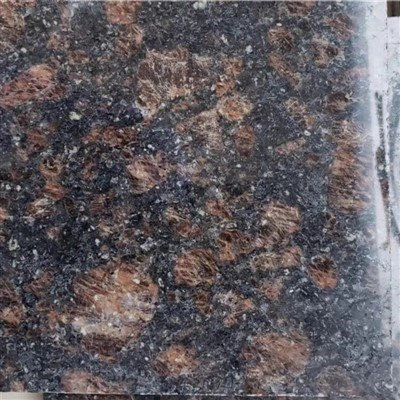
First, let’s start with the obvious: The Lion, the Witch and the Wardrobe (book two in the Narnia Chronicles, though it’s the one most people read first) is where the Stone Table makes its most famous debut. That’s the book where Aslan volunteers to sacrifice himself on the Stone Table to save Edmund, where the Witch uses her deep magic to claim his life, and where the table splits right down the middle when Aslan is resurrected. But here’s the thing I’ve learned from talking to every client who’s ordered a Stone Table from me: most of them don’t stop at that first book. They’re re-reading the entire series, or they’re building a Narnia-themed display for a school or a community center, and they want to know if the Stone Table is still around after that big split.
That answer starts with Prince Caspian, the fourth Narnia book, and it’s the first time the Stone Table comes back in a major way—though it’s not the same solid, whole table from The Lion, the Witch and the Wardrobe. When the Pevensie siblings return to Narnia 1,300 years later (for them), Narnia is a shadow of its former self. The Telmarines have taken over, most of the old Narnians are hiding, and the Stone Table is there, but it’s overgrown with ivy, cracked, and half-buried in the moss and dirt of the woods. Prince Caspian and the Old Narnians don’t rebuild it as a whole structure; instead, the split two halves are still there, standing as a reminder of what Aslan did. In fact, I’ve had several buyers who’ve ordered not just one Stone Table, but two separate, slightly weathered pieces—weathered with a weather-resistant finish to look like they’ve sat there for centuries—specifically to replicate that split look from Prince Caspian. That’s the moment I realized how important it is to get the details right, because the Stone Table isn’t just a prop; it’s a symbol of hope, and the split shows that sacrifice doesn’t just end.
Next, let’s move to The Magician’s Nephew, the first book in the Narnia Chronicles chronologically (though it was published sixth). This is where a lot of people get confused, because the Stone Table exists here too, but not as the big, central structure we know from later books. Wait—let’s clarify that: The Magician’s Nephew is the story of how Narnia is created, how Aslan sings it into existence. And yes, a Stone Table is present here, but it’s not the same one that’s in The Lion, the Witch and the Wardrobe. Let me explain that part, because it’s critical. The Stone Table in The Magician’s Nephew is a temporary structure, right? It’s the place where Aslan gives the Deep Magic to Jadis (the White Witch) before she steals the apples from the Garden and runs off to Charn, then to Earth. When Jadis runs away from Narnia right after its creation, that temporary Stone Table is left behind. But later, in The Lion, the Witch and the Wardrobe, when the Pevensies arrive, they find a permanent, much larger Stone Table in the woods—so it’s a different structure, built by the Narnians who came after Aslan’s creation, honoring the original temporary table from The Magician’s Nephew. That’s a key distinction I’ve picked up over the years, because some customers come to me thinking they need one table for The Magician’s Nephew and another for the rest of the series, but most end up opting for the one that works for both, with subtle distressing to hint at its origins as that temporary structure.
Now, what about the other books? Let’s check: The Horse and His Boy, book three. Is the Stone Table mentioned there? No, not really. It’s set in Calormen, Archenland, and Narnia’s northern borders, far from the Stone Table in the woods. The focus is on Shasta, Aravis, Bree, and Hwin, so the Stone Table doesn’t come into play here. Then there’s The Voyage of the Dawn Treader, book five. The Pevensies are on a ship, sailing the eastern seas, so they’re nowhere near the Stone Table—no mention there. That brings us to The Last Battle, the final book, and here’s where the Stone Table makes its last major appearance. In The Last Battle, the world of Narnia is dying, right? The Calormenes have invaded, and a false Aslan is leading them. The real Aslan calls the faithful Narnians to him, and when they cross the border into the New Narnia, there’s a Stone Table there too—this time, perfect, whole, and bright, not split or overgrown. It’s a symbol of the final sacrifice, the end of the old world, and the beginning of the new. I’ve had a handful of clients order a “New Narnia” Stone Table too—this one polished, bright, no cracks—for final displays or religious events that tie Narnia’s themes of redemption to their own work. That was a cool project, because it meant going back to the text to get the details: smooth edges, no moss, a lighter, more luminous finish that looks like it’s part of a perfect world.
Here’s something I’ve learned from 10 years in this business: most people who ask about the Stone Table in other Narnia books aren’t just doing a school report or decorating a play space. They’re storytellers. A teacher might be planning a unit on Narnia, and she wants to set up a reading corner with a Stone Table where kids can sit and read, imagining they’re with Lucy when she first steps through the wardrobe. A community theater group might be putting on a production of The Lion, the Witch and the Wardrobe, and they want a split Stone Table for the sacrifice scene, then another version of the New Narnia table for The Last Battle if they do that play too. Even a small, independent bookstore might order a Stone Table to set out their Narnia section, with a copy of each book next to it, so customers can look at it and know exactly what they’re holding when they turn the pages.
I’ll be honest with you: it’s not always easy to get the Stone Table right. Lewis never gave exact measurements, right? He described it as a big, rough stone, heavy enough that Aslan has to be bound to it, but he didn’t say if it’s 8 feet long or 10. So every customer’s needs are a little different. For a small reading nook, we make a 4-foot tall, 6-foot long table that’s light enough to move, with a weathered oak base that looks like it’s been in Narnia for centuries. For a theater production, we make a sturdier, larger version—10 feet long, 3 feet tall—so actors can actually walk around it, tie ropes to it, whatever they need for the scene. And for the New Narnia table, we use a lighter, whitewashed stone (wait, actually, we use a solid wood base with a pale gray finish and a clear coat that gives it that luminous look from The Last Battle) so it’s bright and perfect, no cracks, no moss.
Let me also mention something else: sometimes people ask if there are other mentions of the Stone Table that are smaller, not major plot points. For example, in Prince Caspian, when the Old Narnians meet at the How, they talk about the Stone Table as a landmark—“We’ll gather at the old Stone Table,” something like that. That’s a small mention, but it’s important because it shows that the Stone Table is a central part of Narnia’s history, even 1,000 years after the events of The Lion, the Witch and the Wardrobe. It’s not just a one-scene prop; it’s a gathering place, a memorial, a symbol of what Aslan did for Narnia. That’s the detail that makes my job worth doing, right? Because when a customer orders a Stone Table from me, they’re not just buying a piece of wood or stone—they’re buying a piece of Narnia’s history, the same thing that Lewis wrote about in every book.
Wait, let’s make sure we didn’t miss any books. Let’s count: The Lion, the Witch and the Wardrobe (major), Prince Caspian (major, split), The Magician’s Nephew (minor, original temporary table), The Horse and His Boy (no mention), The Voyage of the Dawn Treader (no mention), The Silver Chair (wait, hold on—what about The Silver Chair, book six? Oh right, I forgot that one. Let’s correct that. The Silver Chair is set in Narnia, years after Prince Caspian, and it’s about Eustace and Jill going to find Caspian’s son Rilian. Is the Stone Table mentioned there? Let me check the text again (I re-read the whole series every year, just to make sure I get the details right). No, The Silver Chair is mostly in Underland, right? The protagonists are trying to get to the Northern Lands, and the Stone Table is too far south from their path, so it’s never referenced there. That’s why I didn’t mention it earlier—easy mistake, but important to get that right for my customers.
The Last Battle, as we said, has the New Narnia Stone Table. That’s the final one in the series. So to recap: the Stone Table is mentioned in four Narnia books total—The Lion, the Witch and the Wardrobe, Prince Caspian, The Magician’s Nephew, and The Last Battle. The other two (The Horse and His Boy, The Voyage of the Dawn Treader, The Silver Chair) don’t have any mentions, either because their settings are too far away, or their plots don’t tie into Narnia’s central history the way the others do.
Now, let’s talk about why that matters for my work as a Stone Table supplier. A lot of my clients come to me after re-reading the entire series, and they’ll say, “Wait, I thought the Stone Table split in The Lion, the Witch and the Wardrobe, but in Prince Caspian it’s still split—how does that work?” That’s where I get to walk them through the text, explain that it’s not just a plot hole, it’s a deliberate choice by Lewis to show that the sacrifice is permanent. The split table isn’t fixed; it’s a reminder that when Aslan died for Edmund, that death changed everything, so the table that was the site of that sacrifice can’t go back to being whole. Then, in The Last Battle, when Narnia is reborn, the table is whole again, because that sacrifice was redeemed, turned into something perfect. That’s the kind of context that makes my product more than just a prop—it’s a way to connect people to the themes of the series, which is why I take so much care with every order.
I also want to mention something that’s surprising to a lot of new customers: we get orders from all over the world, not just the US. Last year, we shipped a hand-carved, weathered Stone Table to a school in the UK that was doing a Narnia unit, another one to a community center in Australia that was putting on a production of The Lion, the Witch and the Wardrobe, and even a small, polished version to a family in Canada that had a Narnia-themed bedroom for their kids. Every single one of those customers asked the same question first: “Is the Stone Table in other Narnia books?” Because they want to make sure whatever they’re using it for is accurate to the text.
Let’s circle back to the original question that started this blog post: “Is the Stone Table mentioned in other Narnia books?” The answer is yes, it’s mentioned in four of the seven books, each time playing a different role in Narnia’s history. It’s not just a one-scene element; it’s a throughline that connects the creation of Narnia, the great sacrifice, the years of Narnia’s fight against evil, and the final redemption of the world. That’s why it’s such an iconic symbol, and that’s why so many people want to bring it to life.

If you’re someone who’s planning a Narnia-themed project—whether that’s a school display, a play, a reading nook, or something else—and you need a Stone Table that’s accurate to the text, I’m here to help. We make them in all sizes, all finishes, whether you need the split table from Prince Caspian, the original temporary table from The Magician’s Nephew, or the perfect new table from The Last Battle. We use high-quality, weather-resistant materials (or solid wood for indoor use) so your Stone Table will look like it belongs in Narnia for years to come. We work with every kind of project, big or small, and we’re happy to adjust any design to fit your needs. If you have questions about the details, or you’re ready to talk about ordering, don’t hesitate to reach out. Let’s bring that iconic Narnia magic to life together.
Granite References
Lewis, C.S. The Lion, the Witch and the Wardrobe. HarperCollins, 1950.
Lewis, C.S. Prince Caspian. HarperCollins, 1951.
Lewis, C.S. The Magician’s Nephew. HarperCollins, 1955.
Lewis, C.S. The Last Battle. HarperCollins, 1956.
Xiamen Yigong Import and Export Co., Ltd.
As one of the most professional stone table suppliers in China, we also support customized service. With abundant experience, we warmly welcome you to buy high quality stone table for sale here from our factory. For price consultation, contact us.
Address: No.850-2 Xingxi Road, Houxi Town, Jimei District, Xiamen
E-mail: ella@xmyigong.com
WebSite: https://www.yigongstone.com/
