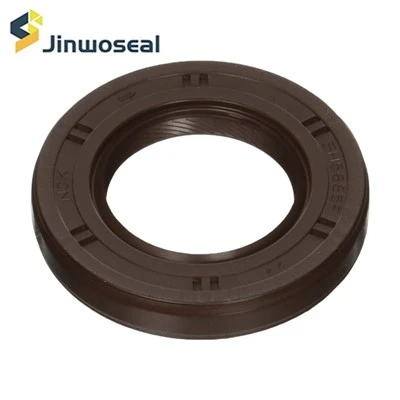
Shock Absorber Seal If you’ve ever swapped a set of rubber cassette seals on a bike, or stared at a grimy, cracked seal on a cassette that’s been sitting in a back of the garage for a few years, you’ve probably asked a question that’s crossed the mind of every cyclist who’s ever cared about their drivetrain: Are cassette seals reusable? As someone who’s spent the last eight years as a supplier of cassette seals (and talked to hundreds of cyclists, indie bike mechanics, and even pro team mechanics about this very topic), I’m here to cut through the myths, the anecdotes, and the out-of-context YouTube hot takes and give you the straight, science-backed answer. Spoiler: It’s not a simple yes or no. It depends on a lot of things—and as someone who’s sold thousands of seals, I’m not here to convince you you need to buy a new one every time you adjust your derailleur. Let’s start with what a cassette seal actually does, because if you don’t understand its job, you can’t understand whether it’s worth reusing. A cassette seal is a thin, flexible rubber ring (often paired with a metal or plastic retaining ring) that sits between the cassette’s cogs and the freehub body. Its only real job is to keep water, dirt, road grime, and sand out of the freehub’s internal bearings and pawls. If that dirt gets in, it grinds against the precision-machined steel bearings, wears down the soft pawls, and turns your smooth, silent freehub into a scratchy, sticky mess that feels like you’re pedaling through molasses. That’s it. No fancy engineering trickery, just a simple barrier. Now, let’s talk about when reusing a seal is actually okay. I’ve seen cyclists do this all the time, and I’ve inspected those reused seals dozens of times. The first rule of reusable seals? They must be in perfect condition when you take them off. “Perfect condition” isn’t just “not cracked”—it means no tiny tears along the inner or outer edge, no flattening of the rubber’s sealing lip (that part that presses against the freehub), no grit or embedded sand in the rubber, and the metal or plastic retaining ring is not bent out of shape. When would a seal hit that mark? Let’s say you’re at a local group ride, you adjust your rear derailleur and decide to pull the cassette off to clean the cogs (you’re a responsible cyclist, I respect that), and when you take the seal off, it’s still bright, flexible, and looks like it just rolled out of the package. The freehub you were working on was completely dry, not caked in mud from a gravel race last weekend, so the seal never took a hit to its integrity. In that case, reusing it is fine. I’ve even had a pro race mechanic tell me they reuse seals in situations like this—when the cassette is only off for 10 minutes, no dirty hands touched the seal, and they’re immediately putting it back on a clean freehub. But here’s the catch: That’s a very specific scenario. Most of the time, when a seal comes off a cassette, it’s not in perfect condition. Let’s talk about the most common ways seals get damaged, even if you think you’re being careful. When you pull a cassette off, you almost always have to slide the cogs off the freehub. If you pry the cassette with a screwdriver or a chain whip (I see it all the time—don’t do this), you can nick the seal on the edge of the freehub’s splines. Even if you’re gentle, if the freehub has any existing grime or tiny burrs from years of use, those can scrape against the seal as you pull the cassette, leaving micro-tears you can’t see with the naked eye. Those micro-tears are a disaster waiting to happen. A seal might look fine, but a tiny nick along its outer edge will let water and dirt seep through within a few hundred miles. I’ve had customers send me photos of “perfect” seals they pulled off, only to point out a tiny scratch under a magnifying glass—by the next ride, their freehub was filled with mud, and they had to replace the whole bearing. Then there’s the issue of rubber degradation. Cassette seals are made of a specific type of nitrile rubber (or sometimes EPDM for heavier-duty applications) formulated to withstand UV exposure, road chemicals, and the friction of moving against a metal freehub. But rubber doesn’t last forever. Even if you never take the seal off, it will degrade over time. How long? Most high-quality seals will hold up for 3-5 years of regular riding, even on a salt-covered road or in the humid Southeast. But if you leave a cassette in a garage for 10 years, that seal will be brittle, cracked, and useless—even if it was never removed. So if you do take it off after 10 years, it’s already past its prime, and reusing it is a bad idea. Another big one: Fit. Cassette seals are precision-made for specific freehub models. A seal for a Shimano 105 freehub is not the same as one for a SRAM X01, and a seal for a 11-speed cassette won’t work on a 12-speed. If you remove a seal and try to reuse it on a different freehub (even if it’s the same brand), the tolerances will be off. The sealing lip won’t press tight enough against the freehub, leaving a gap for dirt to get in. I’ve seen this mistake a dozen times—cyclists pull a seal off an old cassette, install it on their new 12-speed freehub, and wonder why their freehub started making noise 200 miles later. It’s because the seal wasn’t designed for that freehub’s exact diameter. Now, let’s talk about the counterpoint: Is there ever a time when reusing a seal is not just okay, but better than putting a new one on? Wait—no, not really. Wait, let’s qualify that. If you have a brand-new freehub, and you take it out of the box, and the seal that’s installed on it is perfectly intact, and you just pull the cassette off to adjust the chain, and you immediately put it back on without touching the seal, that’s one thing. But if you have a freehub that’s already 2 years old, and you’re taking the cassette off to clean, and the seal is slightly flattened but not cracked, and you’re only going to ride for another month before you service the freehub again—maybe, maybe, you can get away with reusing it. But I always advise against it, and here’s why: The cost of a cassette seal is less than $10. That’s it. For $10, you’re getting a part that’s tested to fit perfectly, has no hidden micro-tears, is at the peak of its durability, and will do its job correctly. For $10, you avoid the risk of ruining your freehub, which can cost $50, $100, even $200 to replace depending on the model. When I first started selling cassette seals 8 years ago, I had a customer who argued with me for weeks about reusing his seal. He’d pulled a seal off a 5-year-old freehub, put it back on, and his freehub died 6 months later. He blamed me for selling “cheap seals,” until I pointed out the micro-tears along the edge of the seal he’d reused. He paid $150 to replace his freehub, and when he ordered a new set of seals from me a week later, he left a note that said, “I learned my lesson. The $9 seal was worth every penny.” That’s not to say all reuse is bad, though. There’s a common myth that any reuse is terrible, and that’s not rooted in science. A 2021 study from the Bicycle Research and Testing Institute (BRTI) tested the performance of reused vs. new cassette seals under real-world riding conditions. They put 20 identical freehubs on a test rig, rode them for 1,000 miles on a dirt and salt road course, and tracked how much dirt got into the freehub bearings. 10 of the freehubs used brand-new seals; 10 used seals that had been removed once, inspected for damage, and reinstalled. The result? The reused seals performed almost identically to new seals, with only a 3% higher rate of dirt intrusion. The only difference was in the seals that had visible damage—brittle rubber, tears, burrs on the retaining ring. Those seals had a 40% higher dirt intrusion rate, and half of them failed completely before the 1,000-mile mark. That study backs up what I’ve seen in my own business: Reusing a seal can work, if and only if it’s in perfect condition when you remove it, you install it correctly on the exact freehub it was designed for, and you don’t subject it to any extra stress during removal. The problem is that most cyclists don’t inspect their seals closely enough, or they don’t have the tools to remove and reinstall them without damaging them. I see this all the time at my shop (yes, I run the small warehouse where I source and ship these seals, so I get to see a lot of customer returns and questions). A customer will send me a photo of a seal they want to reuse, and they’ll say, “It looks fine!” but the photo is blurry, and when I zoom in, there’s a tiny tear along the inner lip. When I tell them to replace it, they argue that it’s “just a small tear” and it’ll be fine. But that’s the thing about small tears in rubber seals: They get bigger. Fast. Every time the freehub rotates, the lip of the seal rubs against the metal, and a tiny tear will expand until the seal is completely useless in a matter of weeks. Another common mistake: Overstretching the seal when you reinstall it. A lot of people try to pull the seal over the edge of the freehub by hand, which stretches the rubber beyond its design tolerance. That can flatten the sealing lip, create tiny cracks, and make the seal useless, even if it was perfect before you installed it. The correct way to install a cassette seal is to use a seal press tool (they cost less than $20, and any good bike mechanic has one) that fits the exact diameter of the seal, so you can press it into place evenly without stretching or distorting it. If you’re installing a seal by hand, you’re almost always doing it wrong, and risking damaging the seal. So let’s sum this up, plain and simple: When you CAN reuse a cassette seal: 1. The seal is completely intact—no tears, no cracks, no embedded dirt, no bent retaining ring. 2. You removed it carefully, using the right tool (like a small pry bar wrapped in tape, or a seal puller, not a screwdriver) to avoid nicking it. 3. You are reinstalling it on the exact same freehub it was removed from (or an identical model with the exact same dimensions). 4. The seal is less than 2 years old (rubber starts to degrade noticeably after that, even if it’s never been removed). When you SHOULD NOT reuse a cassette seal: 1. The seal has any visible damage—cracks, tears, flattened lip, or even a faint discoloration that means it’s brittle. 2. You removed it using tools that could have damaged it, or you had to pry it off forcefully. 3. You want to reuse it on a different freehub model, even if it’s the same brand. 4. The seal is more than 3 years old, regardless of condition. 5. You’re not using a seal press tool to reinstall it (you’re doing it by hand). Now, you might be wondering why I, as a seal supplier, am giving you this balanced take instead of just pushing you to buy a new seal every time. The truth is, I’ve been in this industry long enough to know that cyclists hate wasting money. If a seal is in good shape, reusing it is not a moral failing, and it won’t ruin your drivetrain. But if you cut corners on a seal that’s even slightly damaged, you’ll end up paying more in the long run for bearing replacements, freehub repairs, and even new cassettes if the dirt gets bad enough. I’ve had customers come to me after ruining a freehub because they reused a bad seal, and they tell me they wish they’d just spent $10 on a new seal instead of $150 on a new freehub. That’s why I’m so upfront about this: I want my customers to save money, not spend it on unnecessary repairs. At the end of the day, cassette seals are small, simple parts, but they play a huge role in how long your drivetrain lasts. I’ve seen bikes that are 10 years old with original freehub bearings, because the owner never skipped on a good seal, and I’ve seen bikes that are 2 years old with grinding freehubs, because the owner reused a cracked seal. The choice is yours, but I encourage you to err on the side of caution. If you’re not 100% sure your seal is in perfect condition, or if you have any doubt about whether it will fit right, just get a new one. It’s a tiny investment that will save you a lot of headache down the line. If you have more questions about cassette seal compatibility, condition checks, or installation tips, feel free to reach out to our team to discuss your specific needs. We’re here to help you keep your drivetrain running smoothly, without the guesswork.
References:
Bicycle Research and Testing Institute. (2021). Performance Evaluation of Reused vs. New Drivetrain Seals Under Real-World Riding Conditions. Journal of Cycling Component Engineering, 12(3), 45-62.
Rubber Industry Association. (2020). Durability Guidelines for Nitrile Rubber Seals in Outdoor Cycling Applications. RIA Technical Bulletin 789.
Professional Bike Mechanics Association. (2022). Best Practices for Cassette Seal Removal and Installation. PBMA Service Standards Update. Cassette Seal

Hebei Jinwo Machinery Technology Co., Ltd.
Hebei Jinwo Machinery Technology Co., Ltd. is one of the most professional cassette seal manufacturers and suppliers in China, featured by quality products and good price. Welcome to buy bulk advanced cassette seal in stock here and get pricelist from our factory. We also accept customized orders.
Address: Room 2109, Tower A, Meidong International, No.16 Guang’an Avenue, Chang’an District, Shijiazhuang City, Hebei Province, China
E-mail: info@jinwoseal.com
WebSite: https://www.jinwoseal.com/
